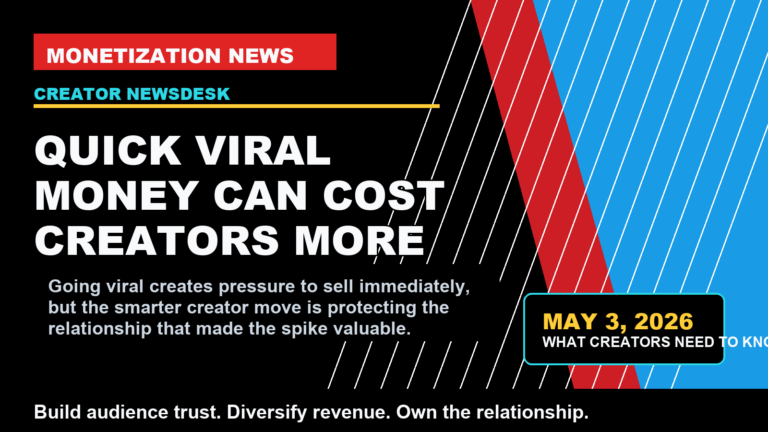
Going viral creates pressure to sell immediately, but the smarter creator move is protecting the relationship that made the spike valuable.
Going viral feels like the perfect time to monetize, but it can also be the fastest way to damage a creator’s relationship with a new audience. A sudden spike brings attention, but attention is not the same as trust.
That distinction matters for creators and founders. When someone pushes a product, course, paid community, or sponsor too aggressively during a viral moment, the audience can feel like the creator cared more about extracting money than delivering value. The short-term sale may work, but the long-term brand can take the hit.
A better strategy is to use viral attention as an invitation, not a cash grab. Give new viewers a clear reason to stay. Show consistency. Explain the point of view. Build an email list, community, or follow-up content path before asking for a major purchase.
Fast monetization is not always wrong. It just has to match the promise that brought people in. Creators who treat trust as the main asset can still sell, but they sell from a stronger position because the audience understands why the offer belongs there.
Creator Newsdesk takeaway
The creator monetization lesson is not to chase every new payout switch. Build trust first, then use platforms as distribution and revenue layers around an audience you can keep.
Join the conversation
Load Facebook comments to read and reply using your Facebook account.
