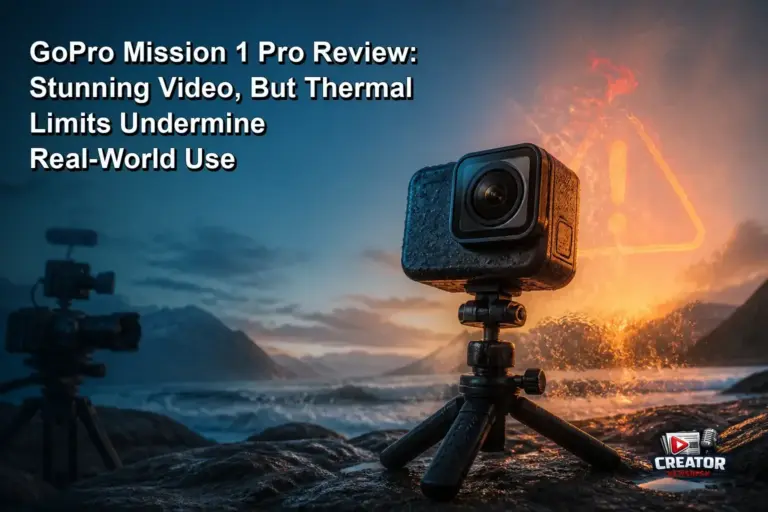
GoPro’s Mission 1 Pro action camera earns praise for its exceptional video capabilities, featuring a large 1-inch sensor that captures sharp, color-accurate 8K at 60 fps and smooth 4K at 240 fps—benchmarks that set a new standard for image quality in the action cam space. For creators prioritizing cinematic detail and dynamic range, this represents a meaningful leap forward, particularly in controlled environments where thermal headroom isn’t tested.
However, real-world usability reveals a persistent issue: the Mission 1 Pro struggles with thermal management during extended recording sessions. Despite its advanced sensor and processing power, the camera overheats under sustained high-resolution workloads, triggering automatic shutdowns or forced downgrades in resolution and frame rate. This isn’t an occasional glitch—it’s a recurring limitation observed across multiple test scenarios, suggesting a systemic design flaw rather than a software bug.
When compared to competitors, the thermal shortfall becomes more pronounced. DJI’s Osmo Action 4 and Insta360’s X4 both deliver robust 4K performance with significantly better heat dissipation, allowing longer continuous recording in 4K/60fps and even 8K modes without interruption. While none match the Mission 1 Pro’s peak 8K60 capability, DJI and Insta360 achieve a more sustainable balance between performance and endurance—critical for creators shooting events, sports, or travel content where reliability trumps peak specs.
The Mission 1 Pro’s premium pricing further amplifies the concern. At a cost that positions it above most rivals, users expect not just class-leading video quality but also dependable operation in demanding conditions. Yet the thermal throttling undermines that promise, forcing creators to monitor temperature, limit clip lengths, or resort to external cooling—workarounds that disrupt workflow and diminish the value proposition.
For the professional creator who tests gear daily, the Mission 1 Pro is a paradox: it produces some of the best action cam video ever seen, but its inability to sustain that performance under real use makes it a niche tool at best. Until GoPro addresses the thermal architecture—whether through improved heat sinking, more efficient processing, or smarter power management—the camera remains a brilliant sensor hampered by a fundamental design constraint. For now, DJI and Insta360 offer more practical, creator-friendly alternatives that don’t sacrifice usability for specs.
Join the conversation
Load Facebook comments to read and reply using your Facebook account.