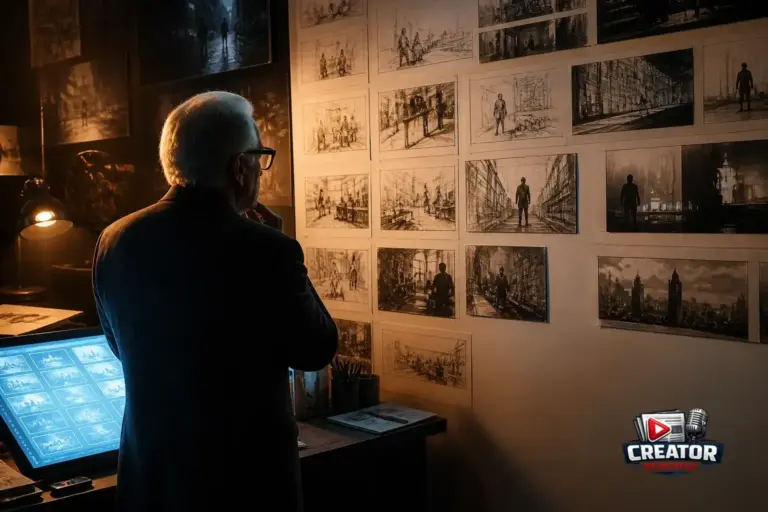
Martin Scorsese, one of the world’s most renowned living directors, has reportedly begun using artificial intelligence tools exclusively for storyboarding his projects. The revelation, shared by TechCrunch on June 2, 2026, notes that the legendary filmmaker’s engagement with AI is limited to this early‑stage visual planning process. While the specifics of the software or workflow were not disclosed, the fact that a director of Scorsese’s stature is experimenting with AI for storyboarding signals a notable shift in how established creatives view the technology.
For content creators, the development underscores a practical application of AI that does not involve generative content creation or deep‑learning‑driven editing, but rather focuses on accelerating the pre‑visualization phase. Storyboarding traditionally requires artists to sketch sequences by hand or with digital illustration tools, a process that can be time‑intensive and costly. By integrating AI, creators can potentially generate rough visual drafts more quickly, allowing for faster iteration and easier communication of ideas to collaborators.
The creator‑business angle lies in the accessibility of such tools. As AI‑assisted storyboarding becomes more mainstream, independent filmmakers, YouTubers, and other visual storytellers may find lower barriers to producing high‑quality pre‑visuals without needing large art departments. This can lead to more efficient pitch decks, clearer direction for shoots, and reduced revision cycles during production.
Moreover, Scorsese’s selective use—confined solely to storyboarding—addresses common concerns about AI overshadowing artistic intent. It demonstrates a model where technology serves as a supportive aid rather than a replacement for human creativity. Creators observing this approach may feel more comfortable experimenting with AI in limited, well‑defined capacities, balancing innovation with artistic control.
Overall, the news from early June 2026 highlights a growing trend: respected industry figures are testing AI in niche, workflow‑specific roles. For the creator community, this offers a concrete example of how emerging tools can be integrated thoughtfully to enhance productivity while preserving the core creative vision that defines their work.
Join the conversation
Load Facebook comments to read and reply using your Facebook account.