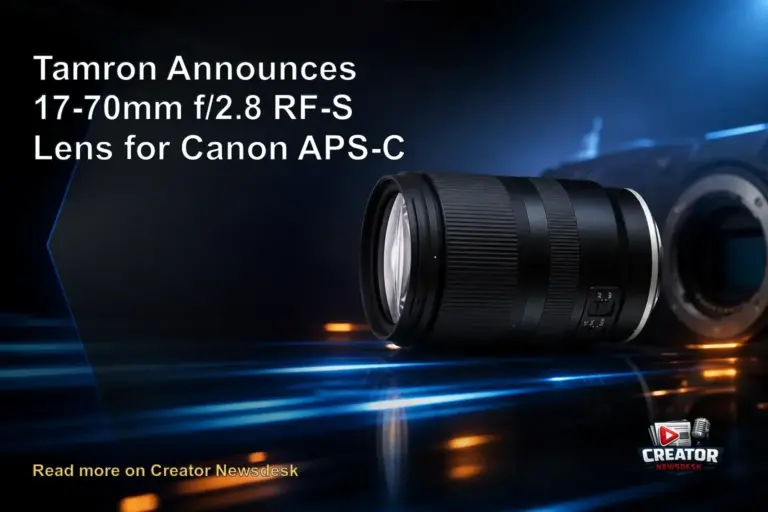
Tamron has officially added a new zoom to its growing RF lens family with the announcement of the 17‑70mm f/2.8 Di III‑A VC RXD. The lens is designed for APS‑C sensor cameras and will be available in both Canon RF‑S and Nikon Z mounts. According to the announcement, the optical construction provides a constant f/2.8 aperture throughout the zoom range, along with Vibration Compensation (VC) and a fast, quiet RXD stepping motor for autofocus.
The focal length translates to a 35mm‑equivalent field of view of 27‑112mm, making it a versatile walk‑around option for creators who shoot stills or video on APS‑C mirrorless bodies. Tamron specifically cites the Canon EOS R7 and EOS R10 as examples of compatible cameras, noting that the RF‑S mount version will work seamlessly with Canon’s APS‑C‑focused RF system.
For content creators, the arrival of this lens expands the selection of affordable, high‑performance zooms within the Canon RF ecosystem. While Canon’s own RF‑S lenses cover similar ranges, Tamron’s entry adds competition that can drive pricing down and give shooters more choices based on factors like size, weight, or specific feature preferences such as built‑in stabilization.
The move also underscores Tamron’s strategy to strengthen its presence in the RF mount market, complementing the existing lineup of full‑frame RF lenses and offering APS‑C users a native‑feeling option without needing adapters. By targeting the popular EOS R7 and R10, Tamron addresses a growing segment of hybrid creators who value both still‑photo quality and video capability in a compact package.
Overall, the 17‑70mm f/2.8 Di III‑A VC RXD represents another step in broadening the lens choices available to Canon RF‑S shooters, reinforcing the idea that a healthy third‑party ecosystem benefits creators by fostering innovation and flexibility across different shooting styles and budgets.
Join the conversation
Load Facebook comments to read and reply using your Facebook account.