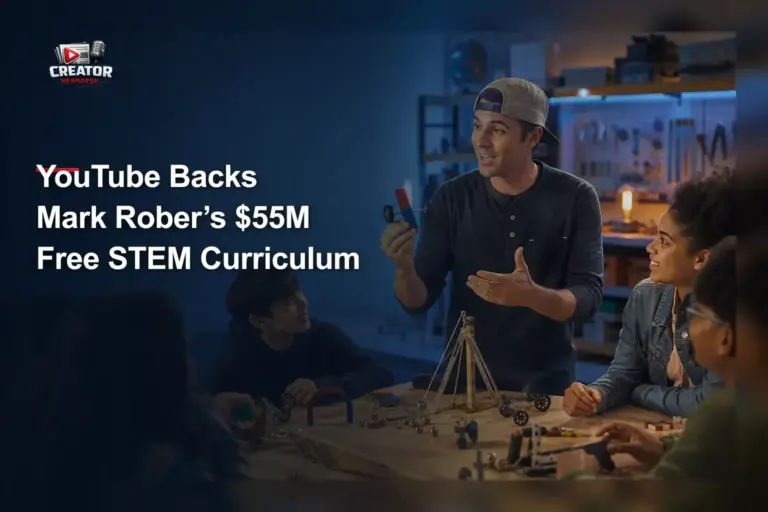
Mark Rober, the engineer-turned-YouTube phenomenon, is committing $55 million to develop a full grade-school STEM curriculum that will be freely accessible to teachers everywhere. According to a report from Tubefilter, YouTube has now officially signed on to support the initiative, called Class CrunchLabs. The project was first unveiled by Rober on Tubefilter’s Creator Upload podcast in 2025.
The scale of the investment is notable: $55 million from a creator’s own resources places this among the largest creator-led education projects to date. Rober has built a massive audience through science and engineering challenges, and this move signals a transition from viral entertainment to long-term educational infrastructure. For the creator economy, it represents a new model—one where platform influence is used to fund and distribute real-world curricula.
YouTube’s involvement adds another layer. The platform has been deepening its role in formal education through tools like YouTube Learning and partnerships with PBS, TED-Ed, and others. Backing an individual creator’s private curriculum is a less typical move, but it underscores the value YouTube sees in high-quality, creator-originated content that can be scaled globally. For teachers, it means a top-tier STEM resource at zero cost, built by someone who understands both the subject and the audience.
For content creators watching, Class CrunchLabs illustrates how deep creator-brand-platform partnerships can go beyond sponsorship. It raises questions about whether other big creators will follow suit with their own curriculum efforts, and how platforms will balance supporting such initiatives without blurring the line between entertainment and educational mandates. As the project unfolds, it will be a benchmark for creator-driven philanthropy—and a reminder that the business of being a creator increasingly includes building systems that outlive individual videos.
Join the conversation
Load Facebook comments to read and reply using your Facebook account.