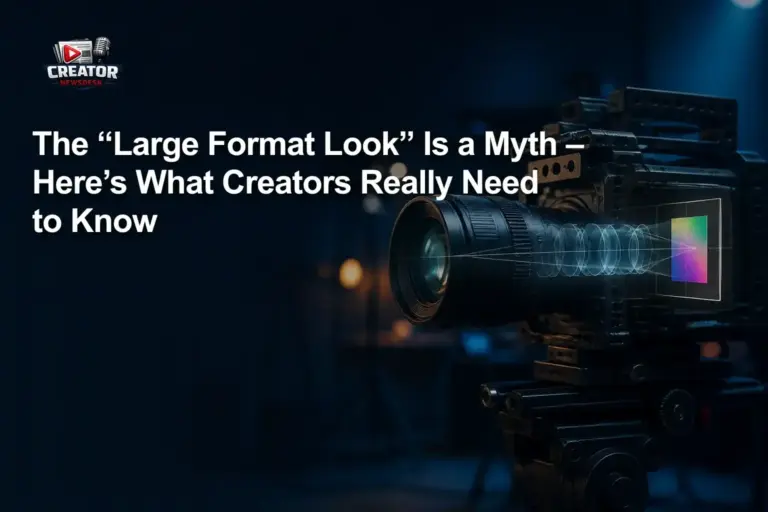
The debate over sensor size in cinematography keeps resurfacing, with many creators insisting that larger sensors are essential for achieving a professional, cinematic look. However, a recent perspective from ProVideo Coalition challenges this assumption, arguing that the so-called “large format look” is more myth than reality. According to the source, the visual qualities often attributed to big sensors—such as shallow depth of field and unique bokeh—are not inherently caused by sensor size alone.
Instead, the article emphasizes that optical characteristics like lens design, focal length, and aperture play a far more significant role in shaping the final image. Larger sensors may enable certain lens behaviors, but they don’t automatically produce the cinematic aesthetic creators chase. The obsession with sensor size, the piece suggests, distracts from more impactful creative and technical choices.
For content creators, this means reevaluating gear priorities. Investing in high-quality lenses and mastering lighting and composition may yield better results than simply upgrading to a larger sensor camera. The focus should shift from sensor specs to the holistic imaging system—where optics, lighting, and skill converge to create compelling visuals.
Ultimately, the “large format look” isn’t a property of the sensor but a result of how light interacts with the entire optical path. Creators who understand this can make smarter, more cost-effective decisions that serve their artistic goals without falling for marketing-driven myths.
Join the conversation
Load Facebook comments to read and reply using your Facebook account.