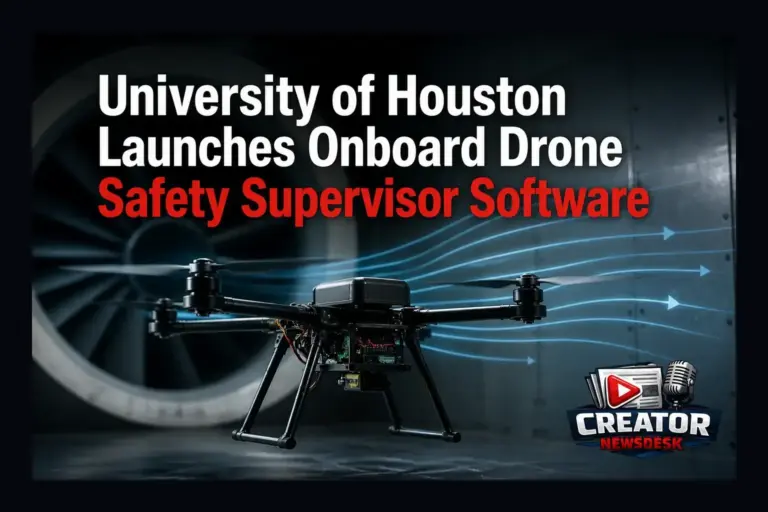
A University of Houston engineer has developed a new software solution designed to help drones maintain stability during unexpected wind disturbances. Marzia Cescon calls the innovation a “safety supervisor”—an onboard monitoring system that continuously evaluates a quadrotor’s tilt and position in real time. The module intervenes when mathematical thresholds indicate a loss of stability, helping prevent crashes without requiring pilot input.
The system operates independently of external signals, relying solely on onboard sensors to detect deviations from safe flight parameters. By processing tilt and positional data instantaneously, the safety supervisor can trigger corrective adjustments before a gust pushes the drone beyond recoverable limits. This approach aims to enhance reliability during outdoor flights, where unpredictable weather remains a leading cause of accidents.
For content creators who depend on drones for aerial photography, videography, and live streaming, unexpected crashes can mean lost footage, damaged equipment, and interrupted production schedules. The safety supervisor addresses a persistent pain point: maintaining control in variable outdoor conditions without sacrificing mobility or requiring bulky ground-based systems.
Unlike geofencing or return-to-home features that activate after a problem occurs, this software works proactively, monitoring flight dynamics continuously to prevent instability before it escalates. Because it runs onboard, it does not depend on GPS strength or cellular connectivity, making it suitable for remote or signal-challenged environments commonly used in creative shoots.
While the technology is still in development, its focus on real-time, mathematically grounded safety checks represents a step toward more autonomous and dependable drone operation. For creators investing in high-end aerial gear, such advancements could translate into fewer losses, longer flight sessions, and greater confidence when flying in less-than-ideal conditions. The University of Houston team has not yet announced plans for commercial release or integration with existing drone platforms.
Join the conversation
Load Facebook comments to read and reply using your Facebook account.