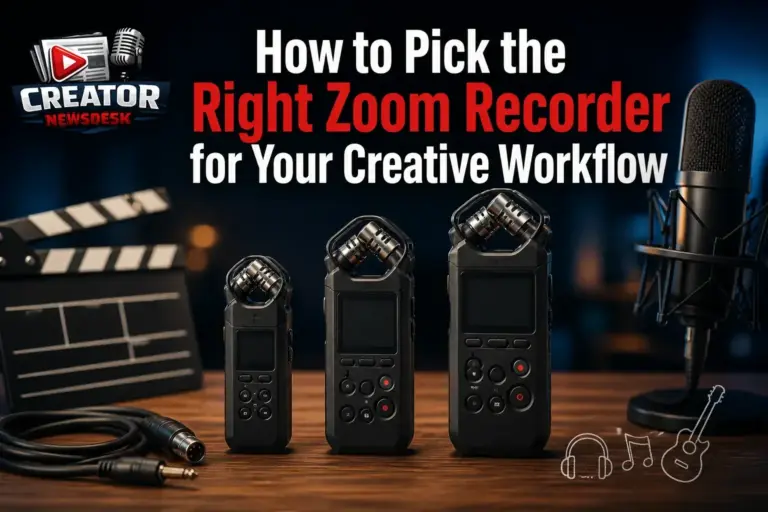
Selecting the right Zoom recorder is a key decision for creators aiming to capture high-quality audio without overcomplicating their setup. With multiple models available—each tailored to different use cases—understanding your specific needs is the first step toward making an informed choice. Whether you're recording podcasts, filming on location, or capturing live music, the right device can significantly impact your production quality.
Riverside’s guide emphasizes matching recorder features to your creative workflow rather than chasing the most expensive option. Factors like input count, portability, battery life, and built-in effects should align with how and where you typically work. A solo vlogger may prioritize compact design and plug-and-play simplicity, while a multi-host podcast team might need multiple XLR inputs and reliable sync capabilities.
The summary highlights that Zoom recorders vary widely in style and function, making it essential to assess your actual use cases before buying. Rather than focusing on technical specs not detailed in the source, creators should consider how a recorder integrates into their existing process—such as ease of use with cameras, compatibility with editing software, or suitability for outdoor recording.
Ultimately, the best Zoom recorder isn’t the one with the most features, but the one that fits seamlessly into your content creation routine. By evaluating your workflow, typical recording environments, and team size, you can narrow down the options to a device that enhances—not hinders—your creative output. Riverside’s approach encourages creators to think strategically about gear as an extension of their storytelling process.
Join the conversation
Load Facebook comments to read and reply using your Facebook account.
