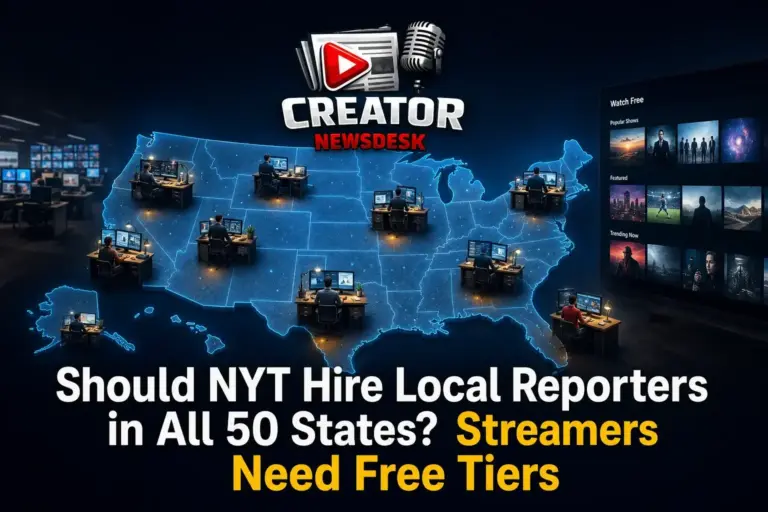
A recent discussion sparked by media analyst Simon Owens questions whether The New York Times should hire local news reporters in all 50 states to strengthen its regional coverage. While the Times has invested in national and international reporting, expanding into hyperlocal journalism could help address news deserts and rebuild trust with communities underserved by national outlets. Such a move would require significant resources but could position the Times as a unifying force in American media, blending national prestige with grassroots relevance.
For content creators, this idea highlights a growing trend: audiences crave authentic, place-based storytelling. Local reporters can uncover issues overlooked by national media—school board decisions, municipal budgets, or neighborhood developments—offering creators a model for hyper-niche content that resonates deeply. By studying how legacy outlets adapt, digital creators can identify opportunities to fill gaps in underserved regions through blogs, newsletters, or video series.
Equally important is Owens’ assertion that every streamer should launch a free tier. As subscription fatigue grows, free, ad-supported tiers offer a low-barrier entry point for viewers hesitant to commit to another monthly fee. Platforms like Tubi and Pluto TV have demonstrated the viability of this model, proving that free access can drive audience scale, boost ad revenue, and ultimately funnel users toward premium offerings.
For creators, a free tier isn’t just about accessibility—it’s a strategic tool for discovery. Offering free content allows new audiences to sample work without risk, increasing the likelihood of conversion to paid memberships or merch sales. It also aligns with evolving consumer expectations, where value exchange and transparency are paramount.
Together, these ideas point to a broader shift: media success now hinges on balancing depth with accessibility. Whether through localized reporting or free access tiers, creators and legacy outlets alike must innovate to meet audiences where they are—geographically and financially. The most resilient media strategies will be those that prioritize both relevance and reach.
Join the conversation
Load Facebook comments to read and reply using your Facebook account.
