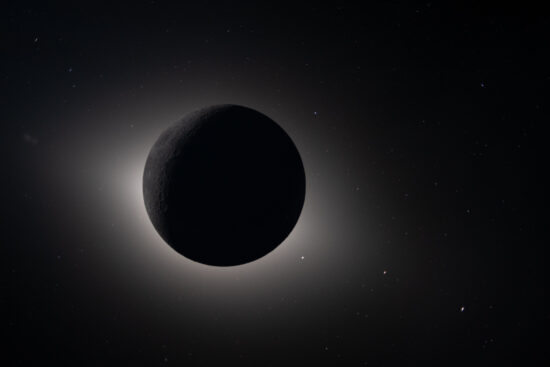
A publicly released JPEG image captured with a Nikon Z9 during NASA’s Artemis II mission has enabled a major scientific discovery, according to a peer-reviewed paper published in 2026. The image, taken using the commercially available mirrorless camera, reveals the large-scale morphology of the optical F-corona—a faint outer region of the Sun’s atmosphere shaped by interplanetary dust scattering sunlight.
Researchers analyzed the Nikon Z9 image to study the structure and extent of the F-corona with unprecedented clarity from deep space. The findings contribute to a better understanding of solar wind interactions and dust distribution in the inner heliosphere. The use of a standard consumer-grade camera in such a high-stakes scientific context highlights the imaging capabilities of Nikon’s Z-mount system.
The Z9, Nikon’s flagship full-frame mirrorless camera, features a stacked CMOS sensor and advanced autofocus system, which performed reliably in the extreme conditions of space. Its inclusion in the Artemis II payload underscores growing trust in professional mirrorless technology for mission-critical applications beyond Earth.
This development marks a rare instance where a widely available photographic tool directly supported peer-reviewed scientific research. It also reflects the expanding role of creator-grade equipment in professional and scientific domains, blurring the lines between consumer innovation and high-end utility. Nikon’s Z-mount ecosystem continues to gain recognition not only among photographers and videographers but also in fields requiring precision imaging under demanding circumstances.
Join the conversation
Load Facebook comments to read and reply using your Facebook account.