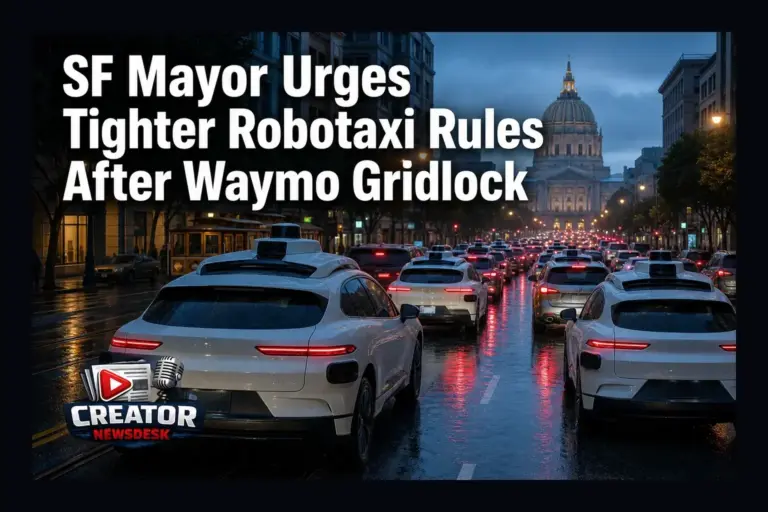
San Francisco mayor Daniel Lurie has called on state regulators to introduce additional requirements for robotaxi operators after a major traffic disruption. The disruption was described as a massive hours-long gridlock event that affected city streets. In his communication to regulators, the mayor emphasized the need for more oversight of companies such as Waymo to prevent similar incidents in the future.
The mayor’s request comes amid growing concerns about how autonomous vehicle testing and deployment interact with urban traffic patterns. City officials have noted that unexpected stops or slowdowns from robotaxi fleets can contribute to congestion, especially during peak travel times. By urging stricter rules, the mayor aims to ensure that any future operations include safeguards that minimize the risk of prolonged road blockages.
For content creators, traffic conditions directly affect workflow. Filming schedules, equipment transport, and location scouts often depend on predictable travel times. A hours-long gridlock can delay shoots, increase costs, and disrupt planned releases. Creators who rely on timely access to neighborhoods or venues may see their projects impacted when roadways become unexpectedly blocked.
Stricter regulations could involve requirements for better real-time communication with traffic management centers, limits on fleet size during certain hours, or mandatory fallback procedures when vehicles encounter unexpected obstacles. Such measures might reduce the likelihood of extended disruptions, thereby helping creators maintain more reliable production timelines.
While the debate over autonomous vehicles in San Francisco continues, the mayor’s latest push highlights the tension between innovation and city infrastructure resilience. Content creators will be watching how state regulators respond and whether any new rules lead to smoother traffic flow for both daily commuters and professional shoots.
Join the conversation
Load Facebook comments to read and reply using your Facebook account.