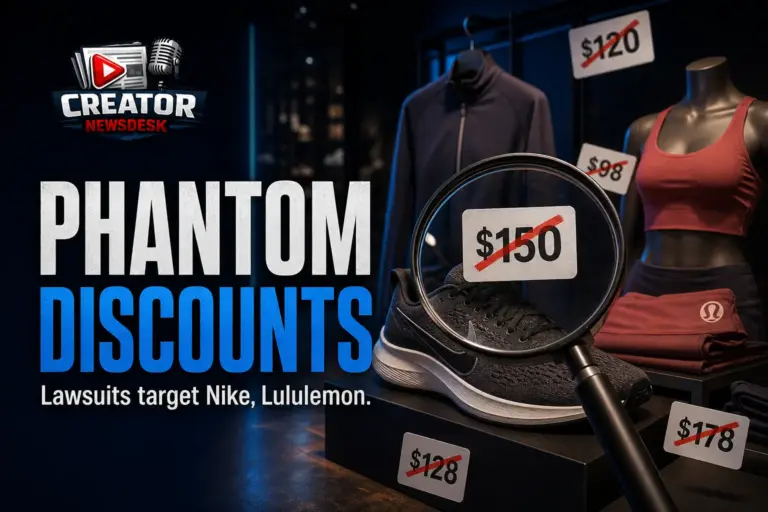
Nike and Lululemon are facing fresh legal scrutiny over so-called "phantom discounts" — an alleged pricing practice where reference prices are inflated to make sales appear deeper than they really are. Lawsuits filed in recent weeks claim the strategy misleads shoppers into believing they are getting a better deal than the actual price history supports.
While the cases remain allegations and the brands have not yet responded in court, the controversy carries implications beyond consumer wallets. For content creators who regularly feature athleticwear and footwear in sponsored posts, haul videos, and affiliate link roundups, phantom discount claims create a trust problem. If audiences feel a recommended "deal" isn't genuine, the credibility of the creator recommending it can take a hit.
The creator-business angle is clear: many creators rely on discount codes and seasonal sales to drive affiliate revenue. When a major brand is accused of inflating original prices to frame discounts, creators may want to verify deal authenticity before promoting it. Cross-checking an item's price history with tracking tools — or simply noting whether the "original" price was ever actually charged — can serve as a simple safeguard.
Transparency is also trending. Platform policies and advertising regulators have pushed creators to disclose affiliate relationships, but the alleged phantom discount strategy introduces a new wrinkle: even a disclosed partnership doesn't make a fake discount genuine. Audiences are increasingly price-savvy and may independently cross-check claims before clicking a link or using a code.
For now, creators working with or recommending Nike and Lululemon should watch how these lawsuits develop. No court has ruled on the merits, and the outcome could reshape how major brands set reference prices — and how creators talk about sales. The practical advice in the meantime: verify before you hype, and let audiences know what is a real deal versus a marketing framing.
Join the conversation
Load Facebook comments to read and reply using your Facebook account.
