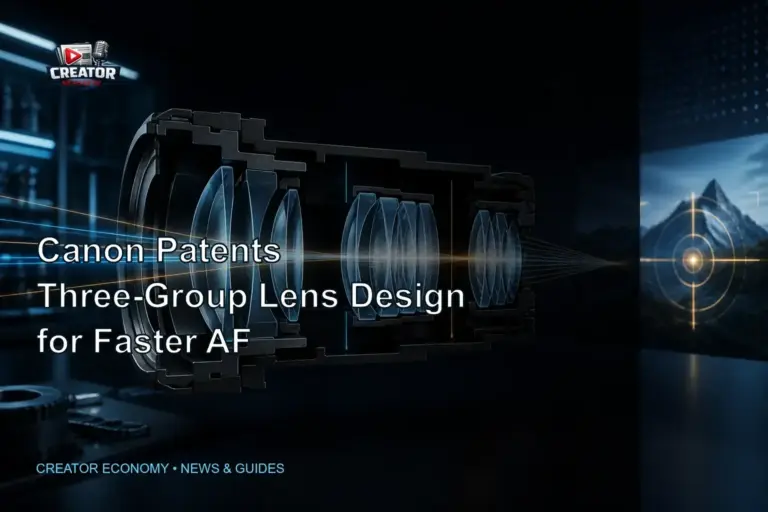
Canon has filed a patent for a three-group lens design that the company says delivers faster autofocus performance, all else equal. The patent, reported by PetaPixel, is notable less for the specific lenses it details than for the design direction it signals. As with all patents, this is a legal filing, not a product announcement — Canon has not confirmed any release timeline or specific lens models.
The three-group arrangement is an engineering choice that departs from more conventional optical layouts. In its filing, Canon suggests the design improves autofocus speed under otherwise identical conditions. Patents frequently never reach production, so readers should treat this as insight into Canon's research and development priorities rather than a roadmap of upcoming lenses.
For creators, autofocus speed is one of the most practical factors in daily work. Faster focus acquisition means fewer missed shots with moving subjects, smoother transitions in video, and less time correcting focus during edits. If this design principle eventually reaches a commercial lens, it could improve the experience for vloggers, event photographers, and documentary shooters alike.
Canon's status as a trusted camera brand — together with the breadth of its lens ecosystem — gives this filing added weight. Creators who invest in Canon bodies also invest in the RF and EF mount systems, and a meaningful autofocus advancement would strengthen the long-term value of those existing setups. A design like this could also hint at how Canon plans to keep its hybrid shooters satisfied as competition intensifies.
That said, the practical implications remain speculative. Patent applications are common across the industry, and many are never commercialized. The clearest takeaway is directional: Canon is actively exploring whether three-group optics can make focusing faster, which could shape future products and, in turn, the tools available to creators.
Creator Newsdesk will monitor any subsequent announcements from Canon. For now, this patent tells us where the company's engineers are looking — and that a faster-focusing future may be on their drawing boards.
Join the conversation
Load Facebook comments to read and reply using your Facebook account.
