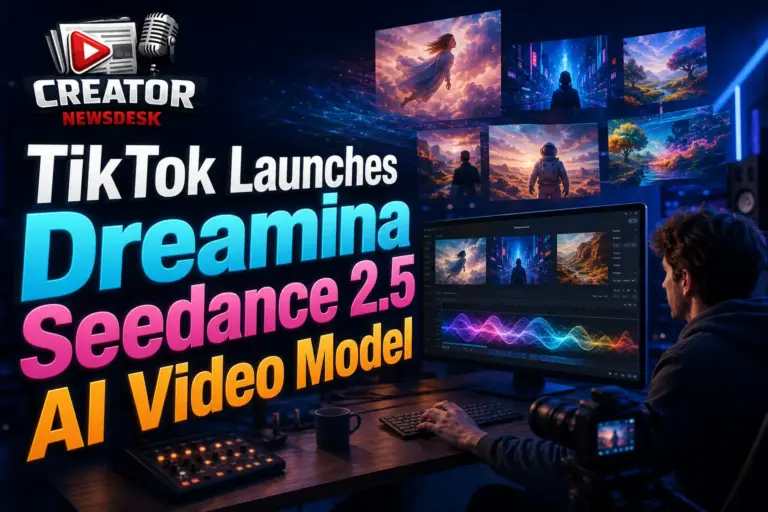
TikTok has introduced Dreamina Seedance 2.5, its newest artificial intelligence video generation model. The announcement, dated August 3, 2026, positions the tool as a way to enable more sophisticated narrative creation within the platform. According to the summary provided, the model is specifically designed to allow for advanced storytelling and the production of longer clips.
For creators, this release expands the set of AI‑driven options available for crafting content directly inside TikTok. By offering a model that focuses on narrative depth and extended duration, TikTok aims to give users more flexibility when developing series‑style videos, mini‑documentaries, or other formats that benefit from a longer runtime. The emphasis on storytelling suggests the tool may help creators structure plots, develop characters, or maintain thematic continuity across extended sequences.
The launch fits into TikTok’s broader strategy of integrating generative AI features to keep the platform competitive in the short‑form video space. While the source does not detail technical specifications, pricing, or usage limits, the framing indicates that Dreamina Seedance 2.5 is intended as a creative aid rather than a replacement for human input. Creators can experiment with the model to generate baseline footage or visual concepts that they can then edit, remix, or augment with their own style.
As with any new AI tool, the practical impact will depend on how accessible the model is within the TikTok creator interface and how well it aligns with diverse content niches. Early adopters may find value in using Dreamina Seedance 2.5 to prototype ideas quickly or to overcome limitations imposed by traditional shooting schedules. Over time, feedback from the creator community will likely shape any future iterations or complementary features that TikTok chooses to roll out.
Overall, the introduction of Dreamina Seedance 2.5 signals TikTok’s continued investment in AI‑enhanced creation tools, offering creators another avenue to explore richer, longer‑form narratives without leaving the app’s ecosystem. As the model becomes available, creators will be able to assess its usefulness for their specific storytelling goals and production workflows.
Join the conversation
Load Facebook comments to read and reply using your Facebook account.
