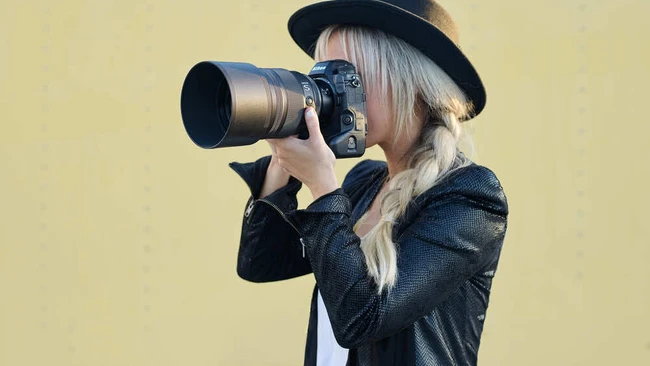
Your first prime lens, often the affordable 50mm f/1.8 "nifty fifty," is a powerful tool for learning photography. It’s compact, sharp, and inexpensive, making it ideal for beginners looking to build strong foundational skills. Unlike zoom lenses, a prime lens forces you to move and think critically about composition, which helps develop better photographic habits early on.
However, transitioning from a kit zoom to a prime lens can be challenging. Because it behaves differently—no zooming, a fixed focal length, and often a wider aperture—beginners frequently make avoidable mistakes. These errors can hinder progress and lead to frustration if not addressed early. Recognizing them is the first step toward improvement.
Common pitfalls include relying too heavily on the wide aperture for every shot, neglecting to check focus carefully, failing to adjust distance to frame subjects properly, and underestimating the impact of lighting when shooting wide open. Others involve inconsistent use of manual focus, ignoring depth of field effects, and not practicing enough to build muscle memory for framing without zoom.
Understanding these mistakes helps creators use their prime lens more intentionally. By slowing down, practicing deliberate composition, and learning to work within the lens’s constraints, beginners can unlock its full potential. The prime lens isn’t just a piece of gear—it’s a teaching tool that, when used correctly, accelerates growth in photography.
For content creators aiming to level up their visual storytelling, mastering the prime lens is a valuable step. Avoiding these common errors ensures sharper images, stronger compositions, and a deeper understanding of core photographic principles—all essential for building a professional-grade portfolio.
Join the conversation
Load Facebook comments to read and reply using your Facebook account.