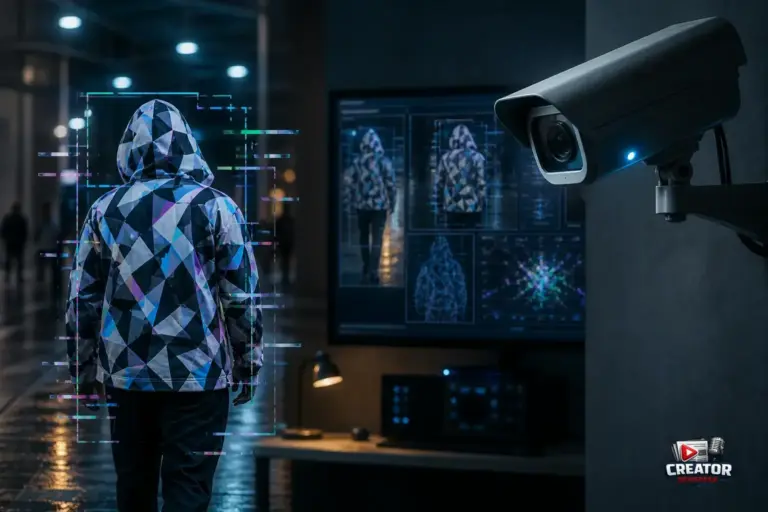
A security researcher has devised an algorithm that generates computer‑generated patterns capable of obscuring people, faces, and vehicles from detection by surveillance cameras. The work was highlighted by TechCrunch on August 9, 2026, describing the approach as an adversarial pattern designed to interfere with visual recognition systems.
The algorithm produces specific visual noise or textures that, when overlaid on clothing, accessories, or vehicle surfaces, cause standard camera‑based detection models to fail to identify the subject. While the technical details of the model remain undisclosed in the source, the core claim is that the generated patterns reliably prevent the cameras from recognizing the hidden objects or individuals.
For content creators, this development introduces new considerations around privacy and on‑set safety. Creators who rely on public spaces for filming might explore such patterns to protect the identities of bystanders or to avoid unwanted tracking during shoots. At the same time, the same technology could be used to conceal illicit activity, prompting a need for clear guidelines and responsible use policies within creator communities.
Ethical questions arise concerning the balance between individual privacy and public safety. The potential for adversarial patterns to thwart legitimate surveillance—such as traffic monitoring or security enforcement—means that creators, technologists, and policymakers must engage in ongoing dialogue about acceptable boundaries and safeguards.
As the technology evolves, staying informed about both its capabilities and its implications will be essential for creators who wish to leverage innovative tools while respecting legal and ethical standards. The research underscores the growing intersection of computer vision, security, and creative expression, highlighting the need for thoughtful adoption in the creator economy.
Join the conversation
Load Facebook comments to read and reply using your Facebook account.