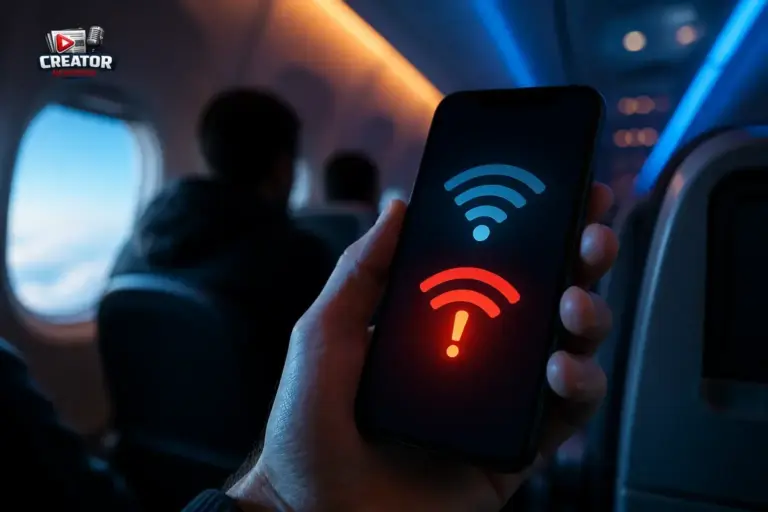
Delta Air Lines is investigating an incident in which someone set up a fake Wi-Fi network onboard an aircraft, according to a company spokesperson. The flight crew responded by disabling the plane's legitimate Wi-Fi system for roughly 30 minutes while the situation was addressed. The incident, first reported by TechCrunch, highlights a growing security concern for travelers who rely on inflight connectivity.
For content creators, the timing of this news is a useful reminder about the risks of "evil twin" networks. These deceptive access points mimic a trusted network name—like "Delta Wi-Fi" or a free airport hotspot—to trick devices into connecting. Once a user joins, the operator can potentially intercept traffic, harvest login credentials, or inject malicious content, including booby-trapped downloads.
Creators are especially vulnerable because they routinely move between hotels, airports, coffee shops, and aircraft, often handling high-value assets on the go. Unreleased video projects, client contracts, financial details, and channel login credentials are all attractive targets. A compromised session on a public network could lead to account takeovers or leaked content, which carries both financial and reputational consequences.
While Delta has not released details about how the fake network was delivered or whether any passenger data was compromised, the incident serves as a cautionary tale. Experts generally advise travelers to avoid connecting to open or unverified networks, particularly when handling sensitive work. Using a trusted Virtual Private Network (VPN) adds a layer of protection by encrypting traffic, making it harder for attackers to read intercepted data.
For creators who must upload large files or coordinate with teams mid-air, the 30-minute disruption is a minor inconvenience compared to the potential fallout of a security breach. Until investigations conclude, Delta has not indicated whether any policy changes will follow. In the meantime, the safest workflow for creators on the move remains simple: verify the network name with airline staff or signage, use a VPN, and avoid accessing sensitive accounts on any public connection.
Join the conversation
Load Facebook comments to read and reply using your Facebook account.