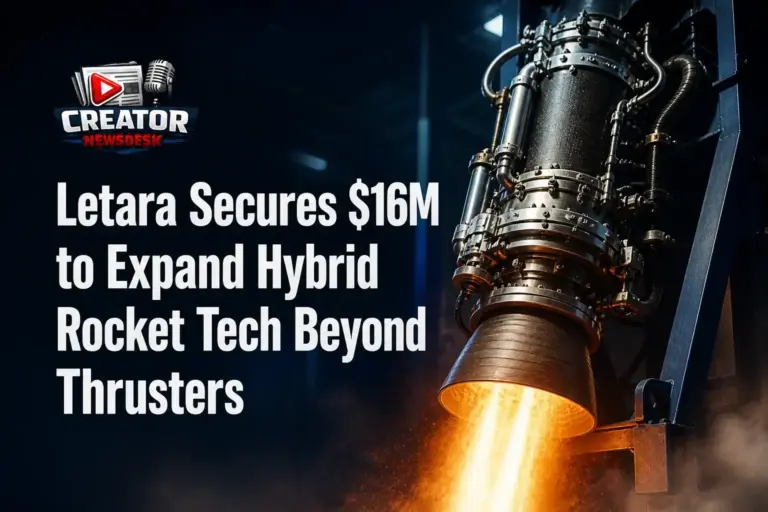
ARTICLET: Japanese space technology startup Letara has announced a ¥2.6 billion ($16 million) funding round, according to a report dated August 22, 2026. The capital will be used to advance the company’s hybrid rocket propulsion system, which currently powers small satellite thrusters. Letara says the new investment will allow it to adapt the technology for a wider range of applications beyond low‑Earth orbit propulsion.
The hybrid rocket design combines elements of solid and liquid propulsion, offering a balance of performance, safety, and cost that has proven effective for maneuvering small satellites. Letara’s existing thrusters have been deployed on several commercial and research missions, providing reliable attitude control and orbital adjustments. The company now aims to scale this capability to support larger payloads and more demanding mission profiles.
According to the summary, Letara is betting that its hybrid rocket technology can serve a broader market encompassing space, defense, and security sectors. This could include launch vehicles for small to medium payloads, propulsion for maneuverable defense assets, or systems that support secure communications and surveillance platforms. The shift represents a strategic move from niche thruster supply to a more diversified aerospace portfolio.
For content creators, the expansion may open new avenues for space‑based services that rely on reliable and affordable propulsion. Improved access to orbit could enhance Earth‑observation data streams, enable faster deployment of imaging constellations, or support experimental communications payloads that creators use for live streaming, remote sensing, or interactive experiences. While the announcement does not detail specific creator‑focused products, the broader market push suggests increased opportunities for innovative space‑driven content.
Letara’s latest funding round follows a period of steady growth in Japan’s private space sector. The company plans to use the ¥2.6 billion to accelerate research, conduct ground tests, and begin early‑stage demonstrations of its expanded hybrid rocket applications. As the startup moves beyond satellite thrusters, stakeholders across the aerospace, defense, and creator communities will be watching for the next steps in its technology roadmap.
Join the conversation
Load Facebook comments to read and reply using your Facebook account.
