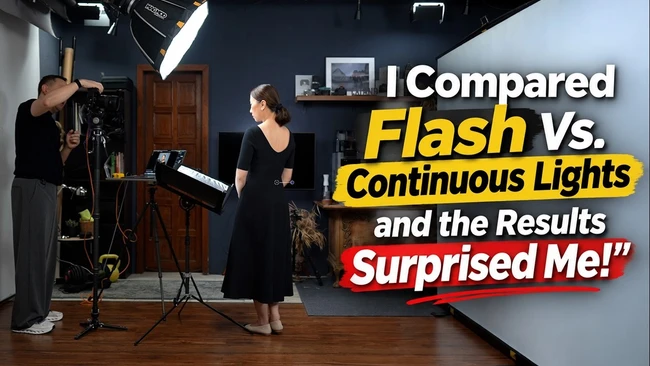
The flash-versus-continuous-light debate is one of the most persistent questions in portrait work, and according to a new Fstoppers breakdown, the honest answer is more nuanced than either camp tends to admit. Both tools can produce nearly identical portraits in the right hands, yet the experience of shooting with each differs in ways that directly affect how creators work on set.
The real variable is what you're shooting. For static subjects—think headshots, beauty work, or posed editorial—either light source can deliver comparable results. But the moment your subject moves, or your shoot requires rapid adjustments, the two approaches diverge. Flash freezes motion and offers raw power; continuous light gives you immediate feedback without the guesswork of metering and test shots.
That workflow difference is where the creator-business angle comes into focus. Continuous light is inherently what-you-see-is-what-you-get: you shape the light, see it fall on the subject in real time, and adjust instinctively. Flash, by contrast, demands a more methodical process—metering, adjusting power, checking your histogram—which slows the pace of a shoot but rewards technical precision. For creators juggling tight schedules or working with nervous subjects, that distinction can mean the difference between a relaxed session and a technical slog.
There's also the hybrid-shooting reality many creators face today. A continuous light rig can double as video lighting for behind-the-scenes content or client deliverables, while flash remains a stills-first tool. Neither approach is objectively superior; the choice hinges on your shooting style, your subject matter, and how you want to run your set. The Fstoppers analysis makes clear that the "huge difference" some claim is less about the final image and more about the process of getting there—which is precisely what creators should weigh when building their kit.
Join the conversation
Load Facebook comments to read and reply using your Facebook account.
