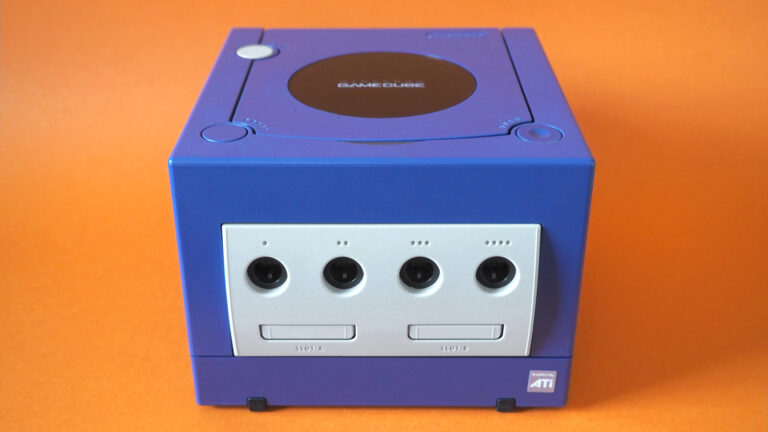
The debate over which retro console delivered more raw rendering power—Nintendo’s GameCube or Sony’s PlayStation 2—continues to spark interest among content creators and gaming historians. While both systems defined the early 2000s gaming era, their architectural approaches differed significantly, influencing not just gameplay but also the types of experiences developers could build. For creators focused on retro analysis, emulation, or preservation, understanding these differences offers valuable context.
According to Engadget’s September 12, 2026, comparison, the GameCube and PS2 each excelled in distinct areas despite the PS2’s broader commercial success. The GameCube featured a custom IBM PowerPC-based "Gekko" CPU and an ATI "Flipper" GPU, designed for efficient, high-quality graphics rendering with strong support for advanced lighting and texture effects. Its architecture allowed for consistent performance in first-party titles, often delivering crisp visuals and stable frame rates in games like *Metroid Prime* and *The Legend of Zelda: The Wind Waker*.
In contrast, the PS2 leveraged Sony’s Emotion Engine CPU and Graphics Synthesizer GPU, a complex parallel-processing system that, while powerful in theory, posed significant development challenges. Though the PS2 ultimately hosted a vastly larger library and benefited from strong third-party support, its hardware was often harder to fully utilize, leading to inconsistent performance across titles. This complexity made optimization a key skill for developers aiming to push the system’s limits.
For content creators, this hardware divergence translates into different opportunities: the GameCube’s more predictable performance makes it ideal for showcasing technical artistry and design innovation, while the PS2’s expansive library offers rich material for cultural and historical deep dives. Neither console was universally "more powerful" in a simple sense—each shone in different rendering scenarios based on developer expertise and design goals. As retro gaming remains a vibrant niche for creators in 2026, understanding these nuances helps produce more informed, engaging content that resonates with both nostalgia-driven audiences and tech-savvy viewers.
Join the conversation
Load Facebook comments to read and reply using your Facebook account.
