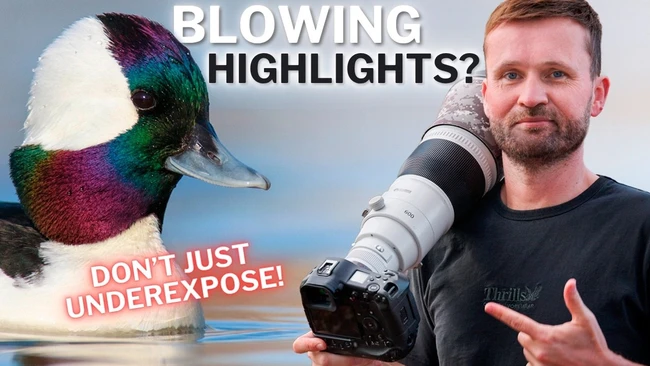
Underexposing to preserve highlights in bird photography might seem like a safe strategy, but it often creates more problems than it solves. When light is challenging—such as in harsh midday sun or backlit scenes—dragging down the entire exposure to protect bright areas results in darker, noisier files. This makes subject tracking harder during shooting and increases the workload in post-production. Creators end up spending more time recovering shadows and reducing noise, which diminishes the enjoyment of the final image.
The core issue isn’t just technical—it impacts workflow and creative satisfaction. Darker files require more aggressive adjustments, which can introduce artifacts and reduce detail in feathers and eyes, key elements in compelling bird photography. Instead of compromising the whole frame, the better approach involves using exposure techniques that preserve highlight detail without sacrificing overall image quality. This might include using spot metering on the bird, adjusting exposure compensation carefully, or leveraging highlight-weighted metering modes available on modern cameras.
For content creators who rely on consistent, high-quality output, avoiding unnecessary editing steps means faster turnaround and more time for shooting or other creative tasks. The goal is to get the exposure right in-camera as much as possible, reducing reliance on heavy corrections later. This approach supports both technical excellence and creative efficiency, especially important for those building a wildlife photography portfolio or producing regular content for audiences.
Ultimately, the fix isn’t to fear overexposure but to understand how to manage it intelligently. By focusing on smarter metering and exposure practices, creators can capture birds accurately in difficult light—keeping highlights intact while maintaining clean, usable files straight out of the camera. This leads to better images, less frustration, and a more enjoyable creative process.
Join the conversation
Load Facebook comments to read and reply using your Facebook account.