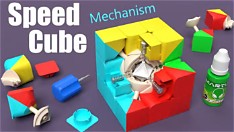
Speed cubes have revolutionized competitive puzzling by integrating engineering upgrades that prioritize speed, stability, and control. Unlike standard Rubik’s Cubes, which rely on friction and basic mechanics, modern speed cubes use strategically placed magnets to align layers during turns, reducing overshoot and improving accuracy. These magnetic systems help creators achieve smoother, more consistent solves—critical for tutorial videos and timed challenge content.
Another key innovation is the use of adjustable tension springs inside the cube’s core. This allows users to fine-tune how tight or loose each layer feels, customizing the cube to their turning style. Content creators often adjust tension to match their filming pace or to prevent lock-ups during fast-paced demonstrations. The result is a highly personalized tool that enhances both performance and viewer experience.
Beyond mechanics, speed cubes feature optimized internal geometries—such as rounded corners and streamlined piece designs—that minimize catching and allow for corner cutting. Corner cutting enables the cube to turn even when layers aren’t perfectly aligned, a vital feature during high-speed solves. For creators producing solve-alongs or algorithm breakdowns, this means fewer interruptions and more fluid on-screen action.
These advancements aren’t just about speed—they’re about reliability. A well-tuned speed cube reduces fatigue during long recording sessions and supports repeatable performance across multiple takes. As cubing continues to grow as a niche within gaming and educational content, understanding the tech behind the cube helps creators choose the right tools to showcase skill, teach effectively, and engage audiences with polished, professional-looking solves.
Join the conversation
Load Facebook comments to read and reply using your Facebook account.
