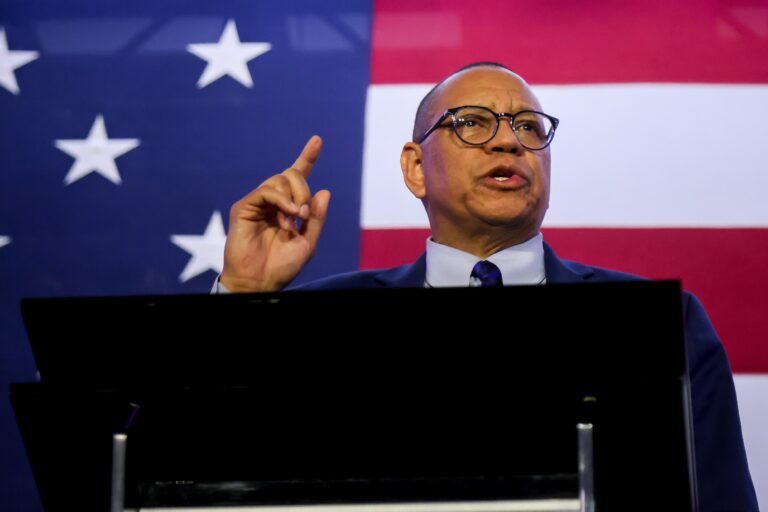
Former New Jersey Lieutenant Governor Dale Caldwell resigned on September 25th following an investigation that found him responsible for sexually harassing a staffer and repeatedly violating state ethics rules. Despite the findings, Caldwell has embarked on a media campaign to clear his name, recently turning to artificial intelligence as a tool in his defense strategy. According to reports, he has been using AI-generated statements or analyses to support his claim of innocence, raising questions about the role of AI in shaping public narratives.
This approach highlights a growing trend where public figures leverage AI not just for communication, but for reputation repair—especially in high-stakes personal and professional controversies. For content creators, the case underscores the expanding influence of AI in media messaging, crisis management, and the blurring line between authentic accountability and technologically assisted persuasion. As AI tools become more accessible, their use in legal, political, and personal defense scenarios is likely to increase, prompting deeper scrutiny over transparency and ethical use.
The Verge’s coverage points to a broader cultural shift: when AI is invoked as a validator of truth—“if AI said it, it must be true”—it challenges traditional standards of evidence and credibility. Creators, who often rely on AI for content generation, editing, and audience engagement, must now consider how these same tools are being used in contexts far beyond creative production. The Caldwell case serves as a cautionary example of how AI can be repurposed to influence perception, even when factual findings remain unchanged.
For the creator economy, this development reinforces the need for media literacy and critical evaluation of AI-assisted claims. As AI-generated content becomes more prevalent in public discourse, distinguishing between factual reporting, AI-enhanced commentary, and outright manipulation will be essential. Creators have a responsibility to navigate this landscape with integrity—using AI as a tool for clarity, not concealment. The intersection of AI, ethics, and public trust is no longer theoretical; it’s unfolding in real time, with real consequences.
Join the conversation
Load Facebook comments to read and reply using your Facebook account.
