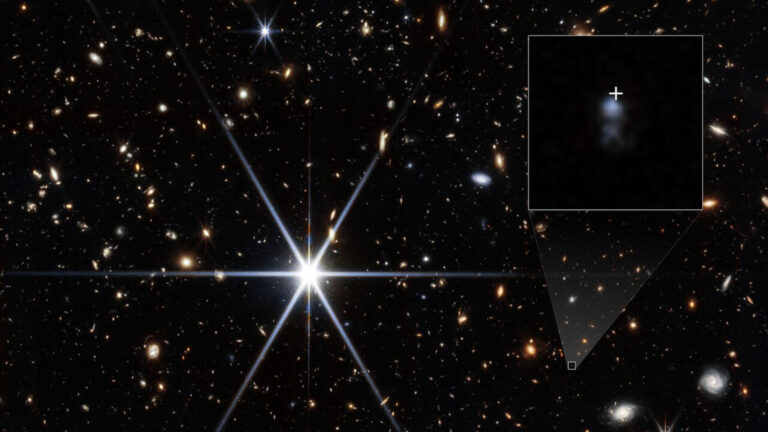
On October 9, 2026, astronomers announced that the James Webb Space Telescope (JWST) had identified the galaxy that produced the farthest fast radio burst (FRB) observed to date. The discovery marks the first time JWST’s infrared capabilities have been used to trace an FRB back to its cosmic origin, providing a clear visual and contextual anchor for one of the universe’s most enigmatic phenomena.
Fast radio bursts are millisecond‑long pulses of radio energy that release as much power in a fraction of a second as the Sun does over days. While their exact causes remain under investigation, locating their host galaxies is a critical step toward understanding the environments that produce them. By pointing JWST at the region of the sky where the record‑distant FRB was detected, researchers were able to resolve the faint glow of its host galaxy, confirming its extreme distance and offering a concrete target for follow‑up studies.
For content creators, this breakthrough supplies fresh, high‑quality imagery and data that can be woven into videos, podcasts, articles, and social‑media posts about astronomy and space exploration. The JWST observations are publicly released through NASA’s data archives, allowing educators and independent makers to download the visuals and incorporate them into storytelling without needing proprietary access.
The detection also highlights the growing role of powerful observatories like JWST in enabling real‑time science communication. As more FRBs are traced to their origins, creators will have a expanding library of concrete examples to illustrate abstract astrophysical concepts, helping audiences grasp the scale and dynamism of the cosmos.
Moving forward, the synergy between cutting‑edge telescopes and digital content platforms promises to keep space science vibrant and accessible. The Oct 9, 2026 announcement serves as a reminder that each new cosmic pinpoint not only advances research but also fuels the next generation of space‑focused narratives.
Join the conversation
Load Facebook comments to read and reply using your Facebook account.
