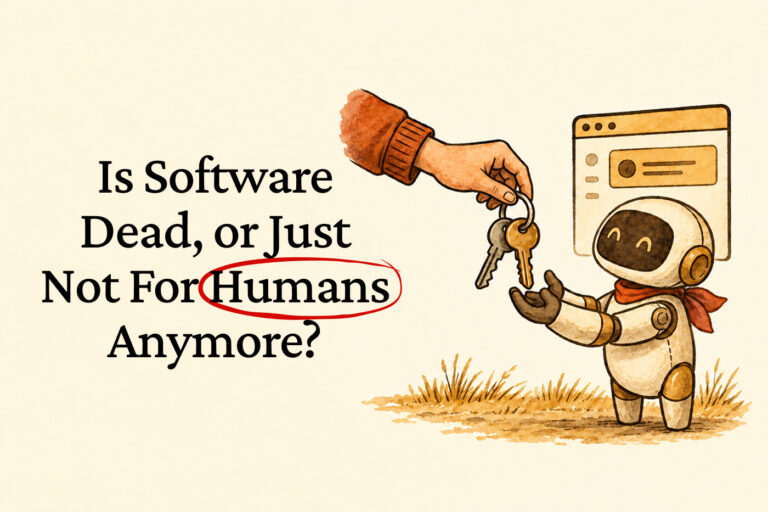
The Creator Economy piece published on October 15, 2026, asks whether traditional software is dying or simply evolving beyond human‑centric use. It frames the discussion around four core reasons why legacy software models are encountering difficulty, while also pointing to where capital and attention are being redirected in the creator ecosystem.
First, the article highlights the accelerating impact of AI‑driven automation. As foundation models become capable of generating code, designing interfaces, and performing routine maintenance, the demand for hand‑crafted software components is diminishing. This shift reduces the reliance on large development teams for tasks that can now be handled by intelligent systems.
Second, the rise of no‑code and low‑code platforms is empowering creators to build and iterate products without deep programming expertise. These tools lower the barrier to entry, allowing individuals and small teams to launch digital experiences quickly, which in turn erodes the market for conventional software development services.
Third, venture capital is increasingly flowing toward platform‑as‑a‑service offerings and AI infrastructure rather than packaged software products. Investors see higher scalability and recurring revenue in services that provide underlying models, data pipelines, or integration layers that creators can consume on demand.
Fourth, user expectations are moving toward embedded, contextual experiences that blend seamlessly into existing workflows. Creators now prefer solutions that operate invisibly within the tools they already use, rather than standalone applications that require separate learning curves and maintenance.
Together, these factors suggest that while traditional software is not disappearing outright, its economic center of gravity is shifting. Money is moving toward AI models, automation layers, no‑code enablement, and flexible platforms that let creators build, modify, and deploy value without owning the underlying software stack. The article concludes that the future belongs to those who provide the building blocks and orchestration tools that let creators focus on expression rather than engineering.
Join the conversation
Load Facebook comments to read and reply using your Facebook account.
