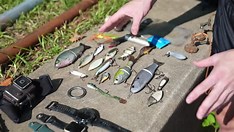
The discovery of a GoPro Hero 4 submerged in Georgia’s Chattahoochee River serves as an unexpected case study in action camera resilience—and its limitations. While the device survived prolonged underwater exposure, the real story lies not in its waterproofing but in what this aging model reveals about GoPro’s persistent design trade-offs. Found by creators Jake and Tristan during a river cleanup, the Hero 4’s intact memory card offered a glimpse into its past use, but underscores a broader issue: even when physically resilient, GoPro cameras often fail under thermal stress during extended recording—a flaw that compromises usability in real-world creator scenarios.
Unlike the Hero 4, modern competitors such as DJI’s Osmo Action series and Insta360’s X line have actively addressed overheating through improved heat dissipation, sensor efficiency, and firmware tuning. DJI’s dual-screen design, for instance, doesn’t just aid framing—it incorporates thermal routing that keeps critical components cooler during 4K/60fps capture. Insta360 leverages modular airflow and AI-driven bitrate management to sustain recording times where GoPros frequently throttle or shut down. These aren’t incremental tweaks; they reflect fundamentally different engineering priorities.
The Hero 4’s survival in the river speaks to GoPro’s legacy of ruggedization—but ruggedness means little if the camera overheats mid-hike, mid-surf, or mid-drive. For daily-testing creators, reliability under load matters more than survivability in still water. GoPro’s continued reliance on compact bodies that trap heat has led to recurring criticism across Hero 7 through Hero 12 models, suggesting a systemic issue rather than isolated bugs.
This incident invites a harder look at what “durability” truly means. Is it surviving a riverbed? Or sustaining peak performance when creators need it most? For professionals who push gear to its limits, the answer increasingly points beyond GoPro’s ecosystem—where rivals have turned thermal management into a competitive advantage, not an afterthought.
Join the conversation
Load Facebook comments to read and reply using your Facebook account.
