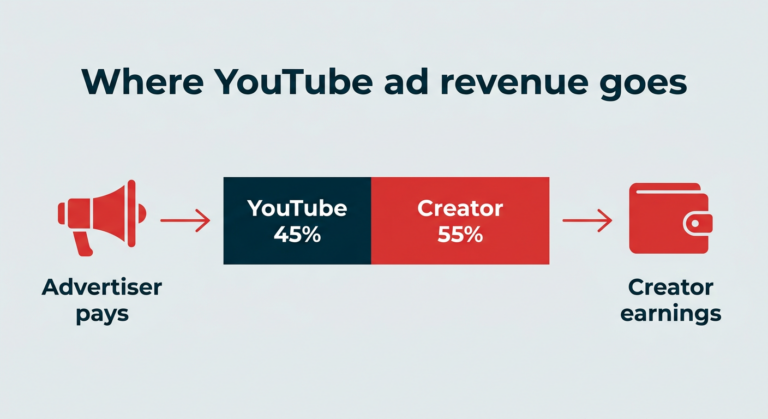
YouTube’s payment structure in 2026 remains tied to ad revenue generated from views, not a fixed rate per view. Earnings depend on CPM (cost per mille), which varies by audience location, content niche, season, and advertiser demand. While the platform does not pay creators directly per view, revenue is calculated based on ad impressions and engagement, with creators receiving a share of net ad income after YouTube’s cut.
To monetize, creators must join the YouTube Partner Program (YPP), which requires 1,000 subscribers and either 4,000 valid public watch hours in the past 12 months or 10 million Shorts views in the last 90 days. Once accepted, earnings are influenced by factors such as viewer demographics — ads in regions like the U.S., Canada, and U.K. typically yield higher CPMs — and content category, with finance, tech, and education often outperforming entertainment or vlogging in ad value.
YouTube does not disclose a universal per-view or per-1,000-views rate because earnings fluctuate widely. Instead, creators are advised to monitor their YouTube Analytics for RPM (revenue per mille), which reflects actual earnings after YouTube’s revenue share. RPM provides a more accurate picture of income than estimated CPM, as it accounts for playback-based monetization and ad types served.
For creators focused on sustainable income, diversifying revenue streams beyond ad revenue — such as channel memberships, Super Chats, merchandise, and YouTube Premium revenue — is increasingly important. While ad earnings remain foundational, relying solely on views can lead to income volatility due to seasonal ad market shifts and algorithmic changes. Understanding YPP eligibility and analytics is key to building a predictable creator business in 2026.
Join the conversation
Load Facebook comments to read and reply using your Facebook account.
