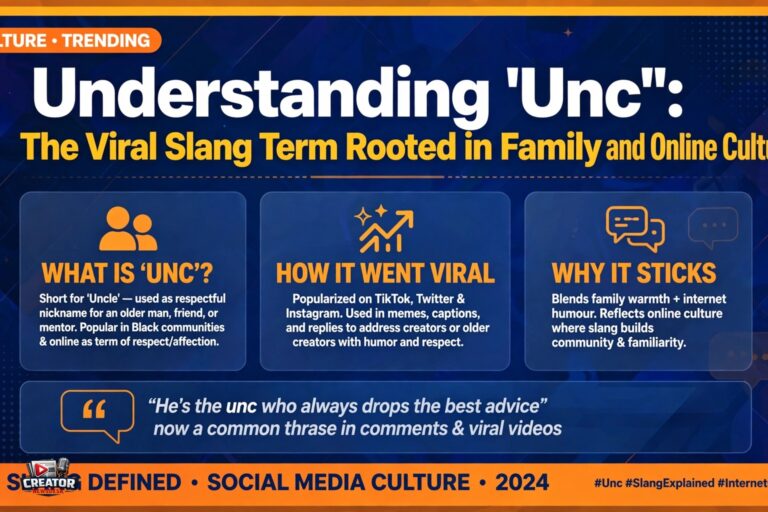
The term "unc" has gained traction across social platforms as a playful yet pointed way to call out someone perceived as old-fashioned or out of touch. Short for "uncle," the slang carries familial roots but has evolved into a cultural shorthand used primarily by younger generations online. According to a 2026 report from Passionfruit, the usage predates TikTok and reflects broader patterns of how internet communities repurpose everyday language for humorous or critical effect.
While often deployed in memes or comment sections, "unc" functions as more than just a joke — it signals generational gaps in understanding trends, technology, or social norms. Creators frequently encounter the term when their content references older references, outdated slang, or analog experiences that younger audiences find quaint or disconnected. Recognizing this dynamic helps creators navigate audience perception and adjust tone without alienating viewers.
The term’s longevity highlights how digital vernacular builds on real-world relationships, transforming personal labels into public commentary. Unlike fleeting trends, "unc" persists because it taps into a universal experience: the gentle ribbing between generations. For creators aiming to stay relevant, understanding such linguistic cues offers insight into community sentiment beyond surface-level engagement metrics.
As online discourse continues to blend humor with social observation, terms like "unc" serve as cultural markers. They reveal not just what people are saying, but how they frame identity, age, and belonging in digital spaces. Staying attuned to these shifts enables creators to communicate more authentically within evolving online communities.
Join the conversation
Load Facebook comments to read and reply using your Facebook account.
