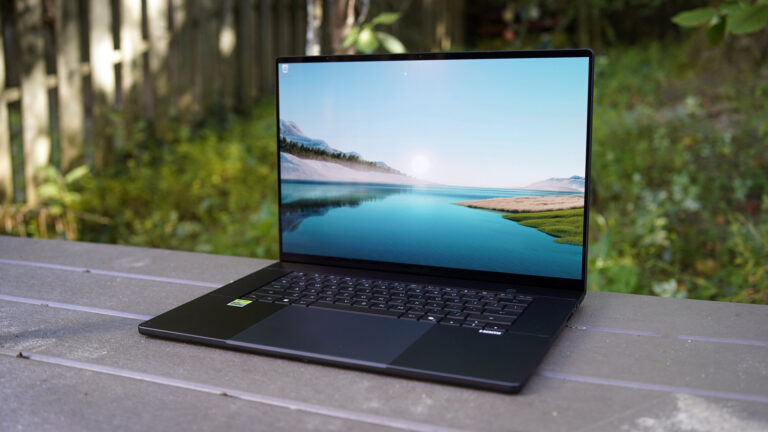
The ASUS ProArt P16 has emerged as an early flagship device demonstrating NVIDIA’s newly launched RTX Spark platform, according to a recent Engadget review dated October 23, 2026. Positioned as a premium mobile workstation, the ProArt P16 leverages RTX Spark to deliver enhanced acceleration for AI-assisted creative tasks, marking one of the first major hardware integrations of the platform. While the review notes that RTX Spark is still in its initial phase, it acknowledges a promising start in enabling real-time AI features within content creation pipelines.
Designed specifically for creators who rely heavily on generative AI tools, the ProArt P16 targets a specialized segment of digital artists, video editors, and 3D designers building AI-enhanced workflows. Its slim chassis and color-accurate display maintain the ProArt series’ reputation for visual fidelity, now paired with on-device AI processing capabilities. However, the Engadget summary suggests the laptop may not be broadly suited for all creator types due to its focused optimization for AI-centric applications.
For professionals investing in AI-driven production—such as prompt-based image generation, automated video editing, or neural rendering—the ProArt P16 offers a tightly integrated hardware-software experience. The system reflects NVIDIA’s broader strategy to embed AI acceleration into creative tools at the silicon level, reducing reliance on cloud-based processing. This localized approach can improve latency, data privacy, and workflow continuity for studio environments.
Still, the review implies that generalist creators using traditional Adobe, DaVinci Resolve, or Blender workflows may find limited immediate benefit unless they actively incorporate AI plugins or NVIDIA Studio-enabled AI features. As such, the ProArt P16 is positioned less as a universal upgrade and more as a forward-looking tool for early adopters experimenting with generative media. Its value will likely grow as more creative software adapts to RTX Spark’s architecture over the coming year.
Creator Newsdesk readers should view the ProArt P16 as a signal of where mobile creative computing is headed—not necessarily a must-buy today, but a meaningful indicator of the AI-integrated workstations expected to dominate 2027 and beyond. Monitoring software support and real-world AI tool performance will be key to assessing long-term relevance. For now, it stands as a sleek, purpose-built showcase for what’s possible when pro-grade design meets on-device AI power.
Join the conversation
Load Facebook comments to read and reply using your Facebook account.
