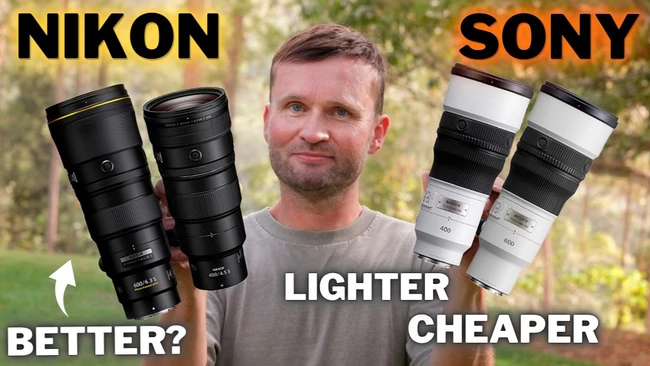
Sony has introduced new 400mm f/4.5 and 600mm f/6.3 prime lenses designed for bird and wildlife photography, offering a compelling alternative to similarly specified Nikon lenses. According to Fstoppers, these Sony lenses closely match the optical design of their Nikon counterparts but are built to be lighter and more affordable. This development gives photographers a meaningful choice when building long-reach kits, where size and cost often pose significant challenges.
The lenses are positioned as professional-grade tools, aligning with Sony’s reputation for advanced autofocus systems and high-performance sensor technology. While the source does not detail specific AF mechanisms or sensor resolutions, it emphasizes that Sony’s ecosystem continues to deliver cutting-edge performance favored by serious creators. These attributes make the lenses particularly attractive for wildlife shooters who rely on fast, accurate focusing and seamless integration with Sony’s mirrorless bodies.
By reducing weight and price without sacrificing optical similarity, Sony addresses a key pain point in wildlife photography: the physical and financial burden of long telephoto lenses. This approach supports creators who prioritize mobility and value, especially those shooting in remote or demanding environments. The move reflects Sony’s ongoing strategy to expand accessibility to professional-level gear.
For photographers deciding between brands, the decision now hinges less on optical performance and more on system compatibility, ergonomics, and total cost. Sony’s lighter build and lower price point may appeal to those looking to minimize fatigue during extended shoots. Meanwhile, Nikon users benefit from identical optics within their own ecosystem.
Ultimately, the release underscores how lens innovation is shifting toward practical usability without compromising on quality. As both companies offer nearly identical optical solutions, creators can now choose based on workflow preferences rather than being locked into a single option due to lack of alternatives. This dynamic fosters healthier competition and greater flexibility in the wildlife photography market.
Join the conversation
Load Facebook comments to read and reply using your Facebook account.
