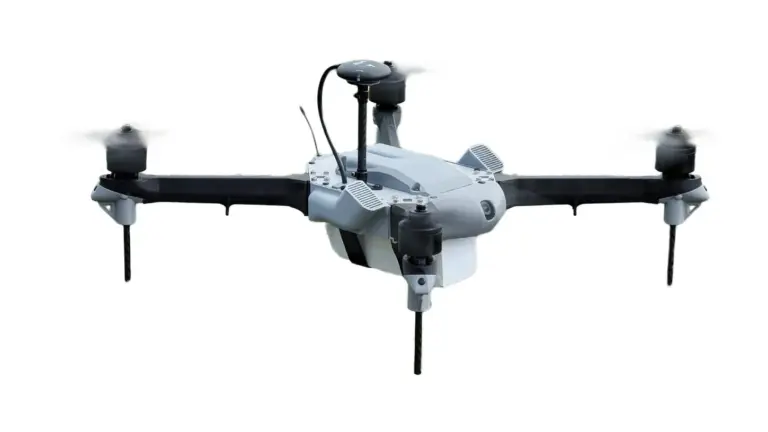
The European Space Agency has awarded funding to Norway-based Rift Dynamics to advance its drone navigation technology capable of operating for up to 10 minutes without relying on GPS signals. The initiative focuses on maintaining drone functionality in environments where satellite signals are disrupted or intentionally jammed—a growing concern for aerial creators working near infrastructure, events, or in geopolitically sensitive areas.
Rift Dynamics, known for its Ondas-backed Wåsp drone platform, is developing low-cost, expendable unmanned aircraft designed to retain basic navigational control when GPS is unavailable. Rather than depending solely on satellite positioning, the system leverages alternative sensors and onboard processing to estimate position and orientation, allowing limited but functional flight autonomy during signal loss. This approach prioritizes accessibility and resilience over precision, targeting scenarios where continuity of operation matters more than exact positioning.
For content creators, the implications are significant. Filmmakers, inspectors, and surveyors often encounter GPS denial in urban canyons, around metal structures, or during live events where electronic interference is common. A drone that can continue flying—or safely return—for several minutes without GPS reduces the risk of sudden loss of control, potentially preventing crashes or lost equipment. While not intended for precision mapping or long-range missions, the technology supports short-duration tasks where reliability under adverse conditions is essential.
The ESA’s involvement underscores growing institutional interest in robust, low-complexity UAV solutions for both terrestrial and space-adjacent applications. By backing a Norwegian startup focused on affordability and deployability, the agency signals confidence in pragmatic approaches to electronic warfare resilience. Rift Dynamics has not disclosed specific sensor configurations or accuracy metrics, but emphasizes the system’s role as a fallback layer rather than a primary navigation method.
As drone usage expands across creative industries, the ability to operate confidently in challenged electromagnetic environments becomes a competitive advantage. This project reflects a broader trend toward layered safety systems in UAV design—where redundancy isn’t just about backup batteries or motors, but about ensuring core functions persist when expected tools fail. For creators pushing boundaries in complex settings, such advancements could mean fewer interruptions and greater peace of mind during critical shoots.
Join the conversation
Load Facebook comments to read and reply using your Facebook account.
