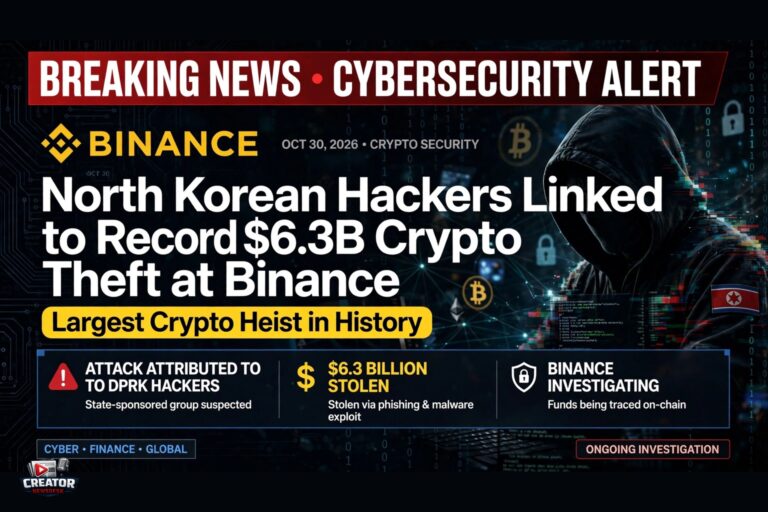
North Korean hackers are believed to be behind one of the largest cryptocurrency thefts in history, targeting Binance through a compromised employee laptop. According to reports from TechCrunch dated October 30, 2026, the breach enabled attackers to siphon approximately $6.3 billion in digital assets—a figure that marks a new high for crypto-related heists. While technical specifics remain limited in public disclosures, investigators point to tactics consistent with Lazarus Group, a hacking collective tied to the North Korean regime known for financially motivated cyber operations.
For content creators who rely on crypto for monetization, sponsorships, or NFT sales, this incident underscores growing risks in digital asset security. Even indirect exposure—through exchanges, wallet integrations, or payment processors—can create vulnerabilities if associated platforms suffer breaches. Creators using Binance for trading, staking, or receiving payments should review account security measures, including two-factor authentication and withdrawal whitelists, regardless of whether they hold funds directly on the platform.
The scale of the alleged theft raises broader concerns about the safety of centralized exchanges and the potential ripple effects across the creator economy. As more influencers and digital artists adopt crypto for revenue streams, the need for robust personal security practices and due diligence on third-party services becomes critical. This event may also prompt renewed discussions about regulatory oversight and exchange accountability in safeguarding user assets.
While Binance has not publicly confirmed the full extent of the breach or attributed it to state actors, the timing and methodology align with patterns seen in prior Lazarus Group campaigns. Cybersecurity experts warn that such attacks often begin with phishing or social engineering targeting employees, highlighting the human element as a persistent weak link in even advanced security systems. Creators are advised to treat exchange accounts with the same rigor as personal financial tools—monitoring activity, limiting API access, and staying informed about platform advisories.
As investigations continue, the incident serves as a stark reminder that in the decentralized vision of Web3, centralized points of failure still pose significant threats. For creators navigating this landscape, vigilance and proactive security hygiene are no longer optional—they’re essential to protecting livelihoods in an increasingly interconnected digital economy.
Join the conversation
Load Facebook comments to read and reply using your Facebook account.