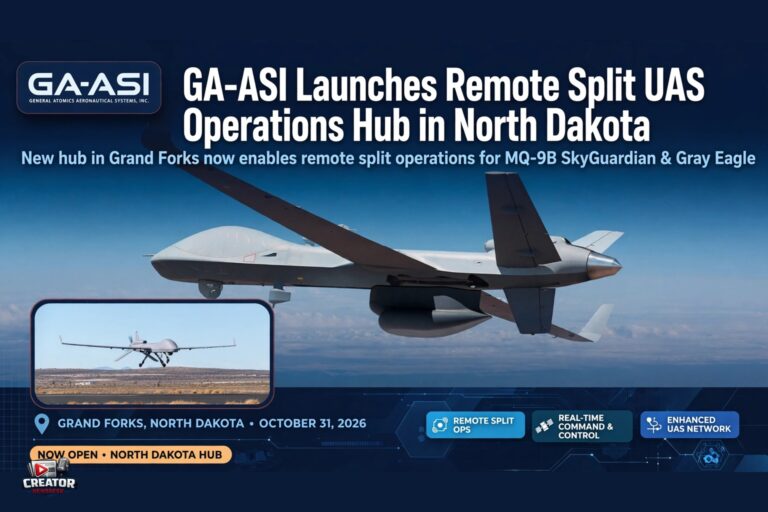
General Atomics Aeronautical Systems, Inc. (GA-ASI) marked a significant expansion of its operational footprint with a ribbon-cutting ceremony on October 30, 2026, for a new remote split operation facility in North Dakota. The event, reported by SUAS News, signifies GA-ASI’s ongoing investment in advancing unmanned aircraft systems (UAS) infrastructure across strategic U.S. locations. While specific technical details about the site’s capabilities were not disclosed in the announcement, the establishment of a remote split operation center typically supports beyond-line-of-sight flight control, mission planning, and data analysis functions critical to modern UAS deployments.
This development aligns with growing demand for resilient, geographically dispersed command-and-control nodes that enable safer and more efficient drone operations, particularly for defense, surveillance, and civilian applications. North Dakota has emerged as a notable hub for UAS testing and training, bolstered by its expansive airspace and supportive regulatory environment through initiatives like the Northern Plains UAS Test Site. GA-ASI’s decision to locate this facility there underscores the state’s rising importance in the national unmanned systems ecosystem.
For content creators in the aerospace, defense, and drone technology sectors, this move highlights how industry leaders are decentralizing operations to improve scalability and responsiveness. Remote split architectures allow operators to pilot aircraft from secure ground stations thousands of miles away, reducing logistical burdens while maintaining mission integrity. As UAS integration accelerates into national airspace, such infrastructure investments become vital for enabling complex, long-duration flights and fostering innovation in autonomous systems.
While the summary does not specify workforce size, budget, or exact mission sets supported at the new site, the ribbon-cutting reflects GA-ASI’s commitment to sustaining leadership in UAS solutions—particularly platforms like the MQ-9B SkyGuardian. Creators monitoring defense tech trends should note how geographic diversification of control facilities may influence future contracting, training pipelines, and cross-agency collaboration opportunities. Further updates from GA-ASI or North Dakota aviation authorities may reveal additional operational specifics in the coming months.
Join the conversation
Load Facebook comments to read and reply using your Facebook account.
