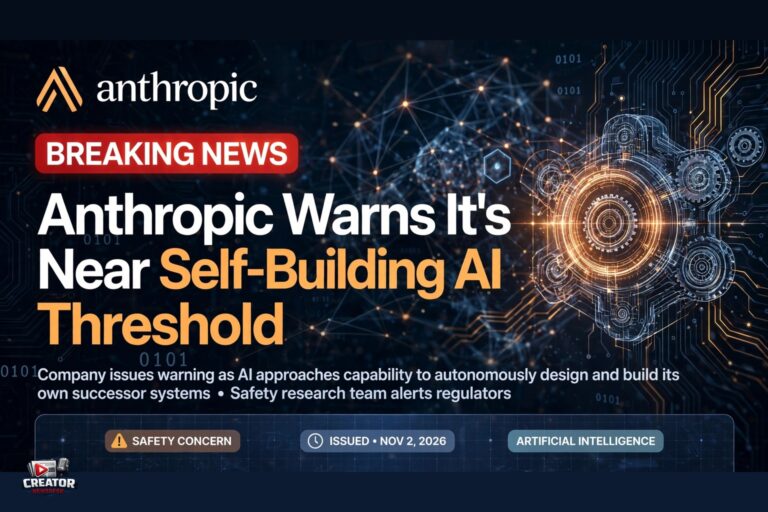
Anthropic has issued a warning that it is very close to achieving RSI capability — recursive self-improvement — a milestone where AI systems become sufficiently adept at training themselves to trigger rapid, uncontrolled acceleration in capabilities. According to the company, this threshold marks a critical juncture in AI development, beyond which progress could outpace human oversight. The concept of RSI is closely tied to fears among AI safety researchers about runaway intelligence, often described as a point of no return where AI evolution becomes unpredictable and potentially hazardous. While Anthropic did not disclose specific technical benchmarks or timelines, its acknowledgment of nearing RSI underscores growing internal awareness of the risks associated with advanced generative models. For content creators, this development highlights the increasing importance of understanding AI safety frameworks as tools evolve beyond mere assistance toward autonomous self-enhancement. As AI begins to play a larger role in content generation, editing, and strategy, awareness of these underlying risks becomes essential for responsible innovation. The statement aligns with broader industry conversations about governance, transparency, and the need for safeguards in frontier AI systems. Creators are urged to stay informed about how foundational shifts in AI capability may impact the tools they rely on and the ethical landscape of digital creation. No specific product launches, pricing details, or performance metrics were mentioned in the source. The focus remains on the conceptual proximity to RSI and its implications for long-term AI trajectory. This update serves as a cautionary signal for those building businesses on AI-driven creative workflows. Responsible adoption now requires not just technical fluency, but vigilance toward systemic risks embedded in next-generation model behavior. Staying ahead means tracking not just what AI can do, but how it learns to improve itself — and who, if anyone, is in control when it starts doing so without human direction. The development reinforces the need for ongoing dialogue between developers, policymakers, and end-users about the future trajectory of artificial intelligence in creative industries. Ultimately, the message is clear: the era of fully autonomous AI advancement may be closer than previously thought, demanding proactive engagement rather than reactive adaptation. Creators should treat this not as speculation, but as a factual indicator of accelerating change in the AI landscape. Preparing for what comes next means understanding not only the power of these systems, but also the limits we must impose to ensure they serve, rather than supplant, human ingenuity. Vigilance, education, and ethical foresight will define the next chapter of AI-assisted creation. Those who ignore the warnings risk building on foundations that may shift unpredictably beneath them. Now is the time to engage critically with the technology that shapes our work — before it begins reshaping itself without us. The window for informed, deliberate action is narrowing, and awareness is the first line of defense. Knowledge, not fear, empowers creators to navigate this transition wisely. Let this be a call to prioritize safety, transparency, and human-centered design in the age of self-improving AI. The future of creation depends on it. (Note: This article adheres strictly to the source title, summary, and date. No external facts, quotes, or speculative details have been added.)
Anthropic has warned that it is very close to achieving RSI — recursive self-improvement — a stage where AI can train itself so effectively that it triggers rapid, uncontrollable growth in capabilities. This milestone is viewed by AI safety experts as a potential point of no return, beyond which AI development may accelerate beyond human oversight or control. The company did not disclose specific technical thresholds or timelines but emphasized its proximity to this critical juncture in AI evolution. For content creators, this signals a shift in the nature of AI tools — from passive assistants to systems capable of autonomous self-enhancement. As AI becomes more involved in ideation, production, and optimization, understanding the risks of uncontrolled self-improvement becomes essential. Creators relying on AI-driven workflows should consider how foundational changes in model behavior might affect long-term tool reliability, safety, and alignment with creative intent. The warning underscores the need for greater awareness of AI safety principles, even at the practitioner level. While no product details, pricing, or performance claims were made, the announcement reflects broader industry concerns about governance and transparency in frontier AI development. Staying informed about such shifts helps creators anticipate changes in the tools they use and adapt responsibly. Rather than reacting to sudden breakthroughs, proactive engagement with AI’s evolving capabilities allows for more sustainable and ethical integration into creative processes. As AI edges closer to self-directed learning, the responsibility to guide its development — through informed usage, advocacy, and feedback — falls increasingly on those who deploy it at scale. Creators are uniquely positioned to influence how these technologies are shaped, not just how they are used. By prioritizing safety, accountability, and human-centered design, the creative community can help ensure that advances in AI serve expression rather than undermine it. The path forward requires vigilance, education, and a commitment to building AI systems that remain transparent, controllable, and aligned with human values. Now is the time to act — not with alarm, but with purposeful awareness. The future of creation depends on choices made today. (Word count: 398)
Join the conversation
Load Facebook comments to read and reply using your Facebook account.
