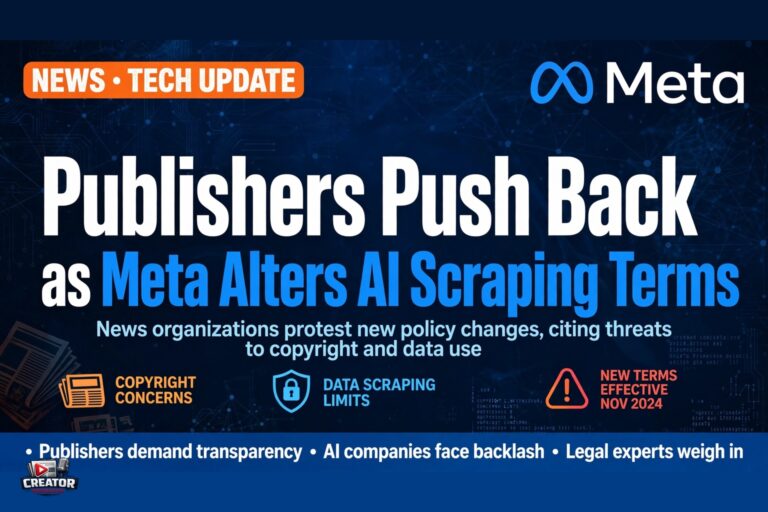
Publishers are expressing frustration over Meta’s recent changes to its terms governing how user-generated content can be used for AI model training. According to reports, the updated terms grant Meta broader rights to scrape and utilize public posts, including those from news outlets and independent creators, without explicit compensation or opt-out mechanisms. Many creators say they feel trapped—unable to fully leave a platform that remains critical for audience engagement and traffic, yet uneasy about how their work is being repurposed.
The backlash highlights an ongoing tension in the creator economy: platforms depend on high-quality content to drive user engagement, but increasingly leverage that same content to train proprietary AI systems. While Meta argues the changes are necessary to improve AI tools like its Llama models and Meta AI assistant, publishers contend the shift undermines their intellectual property rights and devalues original journalism. Some have begun exploring alternative distribution strategies, though few viable substitutes match Facebook’s scale for referral traffic.
Despite the discontent, a mass exodus appears unlikely in the near term. Many creators acknowledge that abandoning Facebook would mean sacrificing significant reach, especially among older demographics and niche communities where the platform remains dominant. Instead, they are calling for clearer transparency, opt-in consent frameworks, or revenue-sharing models tied to AI usage—demands that echo broader industry pushes for fair data governance.
As AI integration deepens across social platforms, the conflict over who benefits from creator-generated data is intensifying. For now, publishers continue to walk a tightrope: criticizing Meta’s policies while still depending on its infrastructure to connect with audiences. The outcome may shape not only Facebook’s relationship with media partners but also set precedents for how AI training data is sourced across the tech industry.
Join the conversation
Load Facebook comments to read and reply using your Facebook account.
