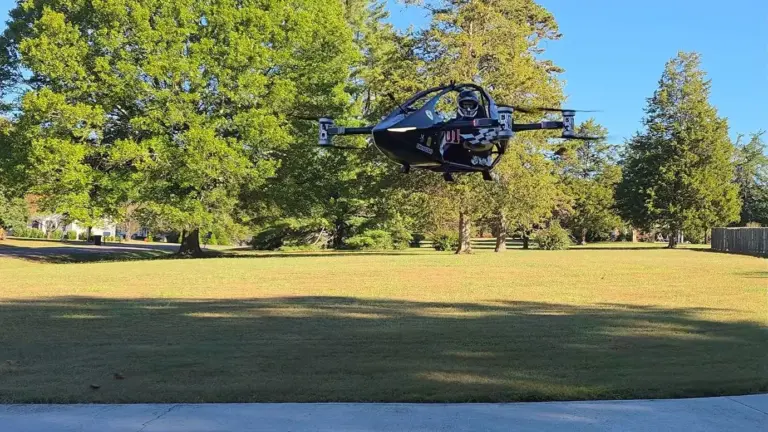
The FAA has informed creator Jimmy's World that his YiVTOL S-Zero Plus personal aircraft does not comply with Federal Aviation Regulation Part 103, which governs ultralight vehicles. According to the agency, the aircraft’s onboard batteries must be included in the total weight calculation, pushing it over the 254-pound limit allowed for unregulated ultralight flight. Additionally, the use of a remote control system classifies the device as a drone rather than a manned aircraft, further complicating its regulatory status. This determination effectively grounds the vehicle for legal operation in U.S. airspace without certification.
Part 103 allows individuals to fly certain lightweight aircraft without a pilot’s license, provided they meet strict criteria including empty weight under 254 pounds, fuel capacity limits, and speed restrictions. The FAA’s interpretation that batteries contribute to the empty weight threshold significantly affects emerging personal electric VTOL designs, where battery packs often represent a substantial portion of total mass. For creators experimenting with DIY or small-scale human-carrying flight technology, this ruling underscores the importance of early compliance planning.
The classification of remotely controlled personal VTOLs as drones introduces additional regulatory layers, potentially subjecting them to operational rules under Part 107 or requiring special airworthiness certificates. While the YiVTOL S-Zero Plus remains a prototype, the FAA’s stance signals increased scrutiny on consumer-accessible flight innovations. Creators developing similar platforms should consult legal and aviation experts to navigate evolving federal guidelines before public demonstration or flight testing. As personal air mobility advances, regulatory clarity will be essential for safe and lawful innovation in the creator space.
Join the conversation
Load Facebook comments to read and reply using your Facebook account.
