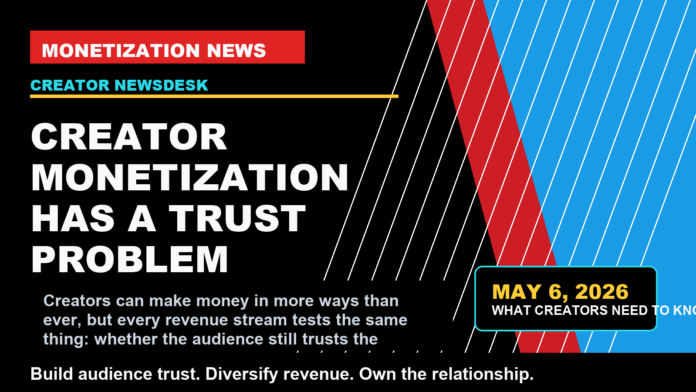


Creators can make money in more ways than ever, but every revenue stream tests the same thing: whether the audience still trusts the person selling to them.
The creator economy has more monetization options than ever, but that does not mean every option is worth taking. Brand deals, subscriptions, affiliate products, shops, paid communities, and platform bonuses all run through the same filter: does the audience still trust the creator after the offer?
That is the tension behind modern creator income. Fast money can be tempting, especially when a video spikes or a creator suddenly gets attention. But a badly matched sponsor, exaggerated claim, or rushed product push can train the audience to see the creator as a salesperson first and a trusted voice second.
For long-term creators, trust is not soft branding. It is revenue infrastructure. A trusted creator can sell fewer things and still earn more because the audience believes the recommendation. A creator who burns that trust may need bigger numbers just to get the same result.
The practical move is to slow down before monetizing every moment. Ask whether the offer fits the audience, whether the claim can be defended, and whether the same audience would still be around after the campaign ends. The creators who survive platform changes are usually the ones who protect credibility before chasing the fastest payout.
Creator Newsdesk takeaway
The creator monetization lesson is not to chase every new payout switch. Build trust first, then use platforms as distribution and revenue layers around an audience you can keep.