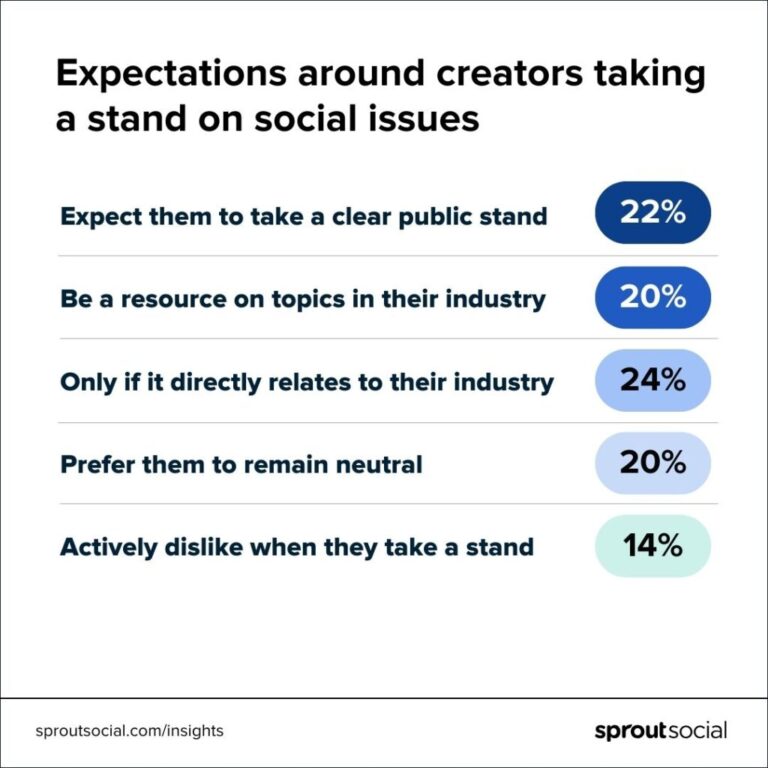
A new survey from Sprout Social of 2,000 consumers finds that 66% expect influencers they follow to participate in activism—with nearly half saying they always do or want them to take a stand. For creators, this signals a clear audience demand, but the business consequences are anything but straightforward.
This expectation puts creators in a bind between maintaining audience trust and preserving brand relationships. While meeting this demand can deepen follower loyalty and boost engagement—key metrics for monetization—it also introduces sponsor friction. Many brands avoid controversy, and a vocal stance on a divisive issue can lead to dropped partnerships or reduced campaign offers.
Legal and platform risks add another layer. Inconsistent activism or performative posts can trigger backlash, damaging credibility and audience retention. Platforms themselves differ: some encourage social cause alignment, while others impose restrictions on political or sensitive content, risking demonetization or shadowbanning. Creators need to audit platform policies before committing.
The survey’s findings underline that activism isn’t optional for many audiences, but it must be strategic. Sincerity matters—followers can spot inauthentic engagement, which erodes trust faster than staying silent. Creators should assess their niche, audience demographics, and existing sponsor agreements to decide if and how to participate.
Practical steps include surveying your own audience to gauge expectations, drafting clear communication plans, and consulting legal or PR advisors before taking a public stand. This data point is a reminder that in today’s creator economy, silence is often read as complicity—but recklessness can cost you sponsors and credibility.
Join the conversation
Load Facebook comments to read and reply using your Facebook account.
