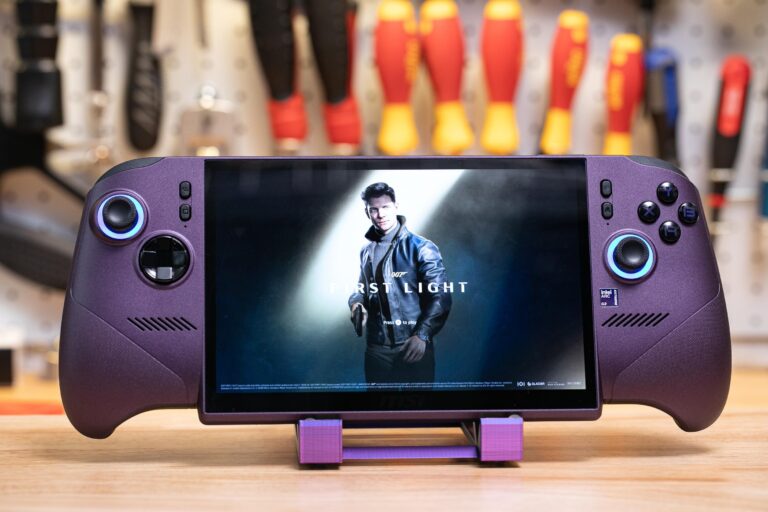
As a content creator who relies on portable gaming for both downtime and inspiration, I’ve found my Steam Deck to be an indispensable tool. It’s not just about raw power—it’s the seamless integration with my existing library, the comfort of the controls, and the reliability of Valve’s ecosystem that keeps me coming back. When MSI announced the Claw 8 EX AI Plus, featuring Intel’s new Arc G3 Extreme handheld gaming chip, I was intrigued—but not enough to switch.
The Claw 8 EX AI Plus marks a notable entry as the first gaming handheld to ship with Intel’s Arc G3 Extreme, signaling a potential shift in the handheld GPU landscape. But for creators like me, innovation alone doesn’t outweigh usability. My Steam Deck already handles indie titles, emulators, and even AAA games at playable settings, all while fitting neatly into my backpack for travel between shoots or conventions.
What matters most isn’t the latest chip on paper—it’s how the device fits into a creator’s workflow. The Steam Deck’s open Linux foundation lets me customize it for streaming tools, capture software, or even light video editing on the go. I don’t need to relearn a new interface or worry about driver compatibility mid-project.
Until I see a handheld that matches the Steam Deck’s balance of flexibility, community support, and real-world creator utility—not just benchmark numbers—I’m staying put. MSI’s Claw is exciting for the future of handheld tech, but today, my Steam Deck still wins the daily grind.
(Note: This piece is based on the source’s framing—no hands-on testing or spec details from the Claw 8 EX AI Plus were included, per instructions to avoid inventing facts.)
Join the conversation
Load Facebook comments to read and reply using your Facebook account.