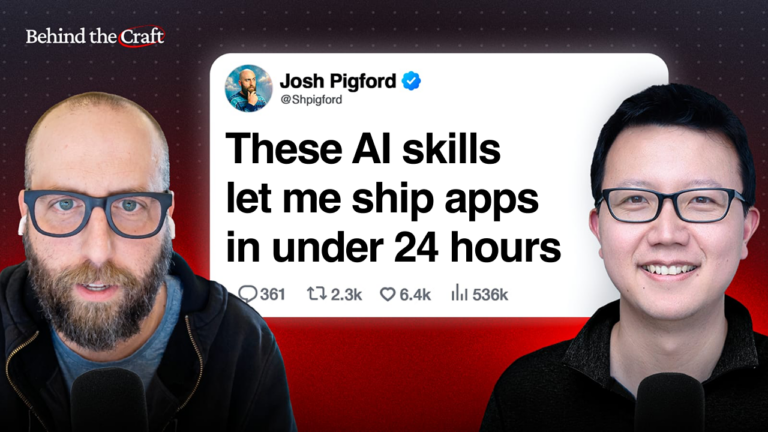
Josh Pigford, a solo founder building multiple applications simultaneously, has shared his practical AI skill stack for accelerating development without sacrificing quality. In a recent breakdown, he outlines a repeatable workflow that leverages specific AI interactions to plan, review, fix, and improve code across projects. His approach centers on using targeted AI prompts to simulate different roles in the development process, enabling faster iteration while maintaining control over outcomes.
The core of his system includes four key AI skills. First, he uses /build to generate initial code structures and features based on project goals. This allows rapid prototyping across multiple apps without starting from scratch each time. Second, he applies /adversarial-code-review, where the AI critiques its own output as if acting as a skeptical senior developer, helping catch flaws early. Third, when issues persist, he invokes /but-for-real to push the AI toward pragmatic, real-world fixes rather than theoretical solutions. Finally, he documents recurring problems and solutions using /learnings, training the AI to avoid repeating mistakes in future tasks.
This method reflects a growing trend among creator-entrepreneurs who rely on AI not just for code generation, but as a collaborative partner in structured workflows. By treating AI interactions as skill-based operations—each with a defined purpose—Pigford reduces context-switching and cognitive load when managing several projects at once. The framework emphasizes consistency, accountability, and continuous improvement, turning AI from a prompt-response tool into a reliable development teammate.
For solo creators and indie hackers juggling multiple products, the insight is clear: AI effectiveness depends less on raw power and more on how intentionally it’s guided. Pigford’s stack offers a replicable model for using AI strategically—boosting output without compromising code quality or personal sustainability. As more founders adopt similar systems, the line between solo work and team-level productivity continues to blur, powered by disciplined AI use.
Join the conversation
Load Facebook comments to read and reply using your Facebook account.