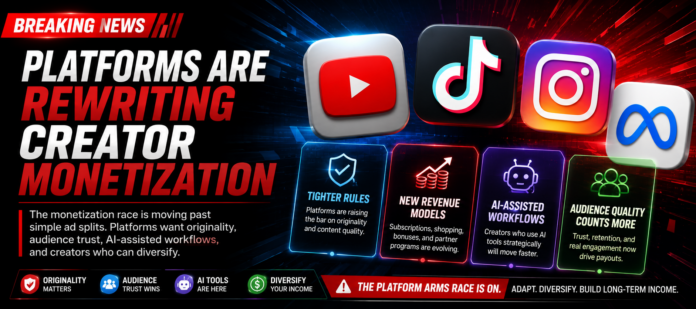


The monetization race is moving past simple ad splits. Platforms want originality, audience trust, AI-assisted workflows, and creators who can diversify.
Creator monetization in 2026 is turning into a platform arms race. YouTube, TikTok, Instagram, and Meta are all trying to keep creators loyal while also pushing them toward new rules around originality, revenue eligibility, AI tooling, and audience quality.
For creators, that means the old plan of posting the same short clip everywhere and hoping one algorithm pays out is getting weaker. Platforms want content that feels native. YouTube wants stronger channel strategy. TikTok is leaning deeper into shopping and trust. Instagram and Meta are rewarding original identity and discouraging recycled feeds.
The important part is diversification. A creator who depends on one payout program is exposed every time a platform changes eligibility, reach, or RPM behavior. Smart creators are building a stack: ad revenue, sponsorships, affiliate offers, shops, subscriptions, email, communities, and long-form assets that can keep earning after the first traffic spike fades.
This is not bad news. It is a signal that creators need to act more like media businesses. Platform choice matters, but the real win is building an audience that can follow you across formats and revenue streams instead of leaving your income trapped inside one app dashboard.
Creator Newsdesk takeaway
The creator monetization lesson is not to chase every new payout switch. Build trust first, then use platforms as distribution and revenue layers around an audience you can keep.