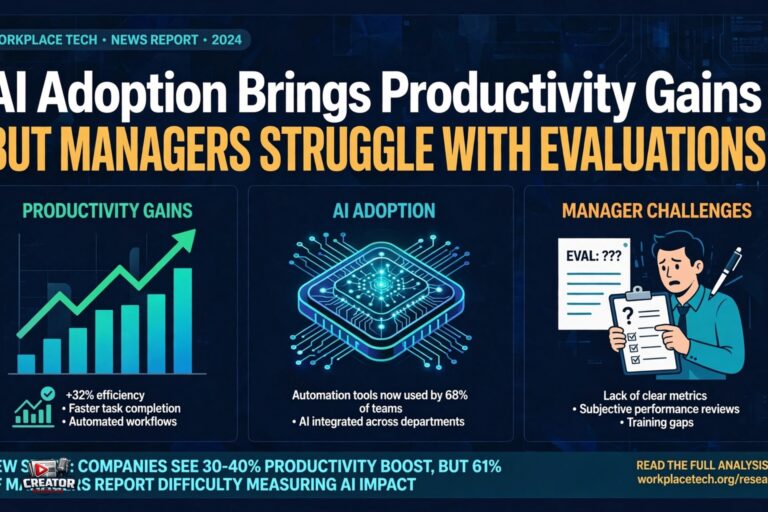
Despite widespread optimism about artificial intelligence boosting efficiency across industries, a recent TechCrunch-reported survey indicates that many managers are experiencing unintended complications following AI adoption. Specifically, more than 50% of managers surveyed stated they are finding it harder to assess their employees’ work since integrating AI tools into daily operations. This counterintuitive outcome suggests that while AI may streamline certain tasks, it can also obscure traditional performance metrics managers rely on for feedback and decision-making. The findings point to a growing tension between technological advancement and human oversight in modern workplaces. For content creators and small business owners who often wear both managerial and creative hats, this insight is particularly relevant. As AI tools become embedded in workflows—from automating video editing to generating social media captions—creators may similarly struggle to gauge individual contributions or track progress when outputs are increasingly machine-assisted. Without clear frameworks to evaluate hybrid human-AI productivity, performance reviews risk becoming subjective or misaligned with actual impact. The survey, though not detailing specific industries or AI applications used, underscores a broader need for updated management practices in the age of automation. Experts suggest that relying solely on traditional KPIs may no longer suffice; instead, leaders should develop new evaluation methods that account for how AI reshapes roles, responsibilities, and measurable outcomes. For creators building teams or outsourcing tasks to AI-augmented freelancers, adapting assessment strategies early could prevent confusion and foster fairer, more transparent collaboration. Ultimately, the promise of AI-driven productivity remains strong—but realizing its full potential requires more than just deploying the technology. It demands thoughtful recalibration of how work is measured, valued, and improved in environments where humans and machines collaborate closely. As adoption accelerates, addressing these evaluative blind spots will be crucial for sustainable growth in the creator economy.
Join the conversation
Load Facebook comments to read and reply using your Facebook account.
