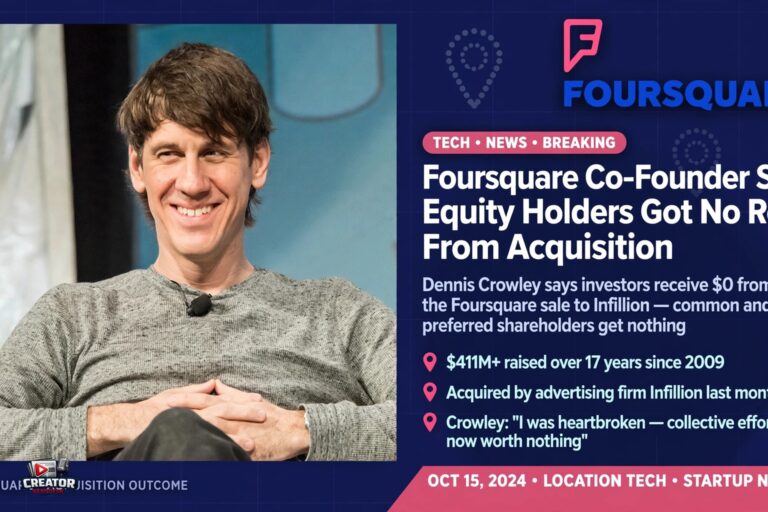
Foursquare’s co-founder has disclosed that despite raising $411 million in funding over the company’s lifespan, equity holders received no financial returns from its eventual acquisition. The revelation, shared in a recent interview reported by TechCrunch on October 21, 2026, underscores a stark reality in the startup world: significant capital infusion does not guarantee investor payouts, even when a company is acquired.
For content creators building personal brands or side ventures, this case serves as a cautionary tale about the risks of equity-based compensation and the importance of understanding exit structures. While Foursquare once dominated the check-in app space and later pivoted to location data and analytics, its journey illustrates how funding rounds, valuation shifts, and acquisition terms can ultimately leave early stakeholders with nothing — despite years of growth and investor confidence.
The $411 million figure, sourced from PitchBook data cited in the report, highlights the scale of investment poured into the company across multiple rounds. Yet, the absence of returns for equity holders suggests that proceeds from the acquisition may have been allocated to debt repayment, liquidation preferences, or other structural factors that prioritized certain investors over common shareholders.
This outcome is particularly relevant in today’s creator economy, where many influencers and digital entrepreneurs accept equity in startups as part of brand deals or advisory roles. The Foursquare example reinforces the need to scrutinize not just a startup’s potential, but also its cap table, funding history, and the likelihood of meaningful returns upon exit.
As more creators explore equity partnerships instead of pure cash compensation, understanding these dynamics becomes essential. Founders and early contributors alike must evaluate whether the upside justifies the risk — especially when historical precedents show that even well-funded companies can deliver zero returns to those who helped build them.
The story doesn’t diminish Foursquare’s technological impact or its role in shaping location-based services, but it does offer a sobering lesson: success in fundraising and product development doesn’t always translate to wealth creation for everyone involved. For creators navigating the intersection of tech, business, and personal branding, such insights are invaluable.
Join the conversation
Load Facebook comments to read and reply using your Facebook account.
