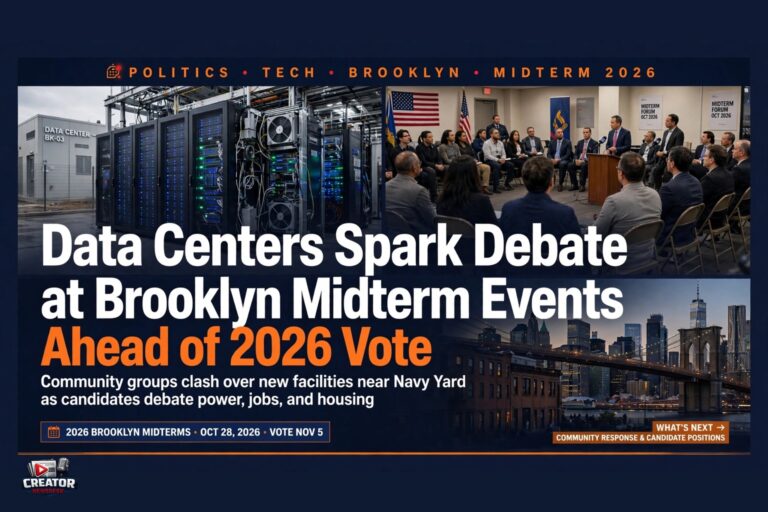
In the days leading up to the 2026 midterm elections, conversations across Brooklyn have increasingly turned to a once-overlooked topic: data centers. According to TechCrunch reporting from November 1, 2026, discussions at local political gatherings—including a council member’s fireside chat and broader debates about the Democratic Party’s direction—kept returning to the implications of AI-driven infrastructure. The trend signals a shift in how urban communities are engaging with the physical backbone of digital innovation.
While national headlines often focus on AI breakthroughs or corporate investments, Brooklyn residents are raising practical concerns tied to data center expansion. These include questions about energy consumption, grid strain, noise, and land use in densely populated areas. The fact that such topics surfaced repeatedly in informal community settings suggests voters are connecting technological growth to local quality-of-life issues—a nuance often missed in broader tech coverage.
For content creators, this development underscores a growing audience interest in the real-world consequences of digital infrastructure. Creators covering tech, sustainability, or urban policy may find fertile ground in exploring how data center siting affects neighborhoods, particularly as AI demand accelerates. There’s also an opportunity to highlight voices from communities hosting—or resisting—these facilities, adding depth to narratives usually dominated by industry perspectives.
The TechCrunch report does not specify exact proposals or opposition groups involved, nor does it cite particular legislation or utility data. However, the pattern is clear: data centers are no longer just a backend concern for IT teams—they’ve become a visible part of the civic conversation in places like Brooklyn. As election day approaches, this local awareness could influence voter priorities, especially among those wary of unchecked tech growth without corresponding investment in resilience, transparency, or community benefit.
This moment reflects a broader maturation in public discourse around technology. Rather than treating AI and cloud computing as abstract forces, constituents are asking who benefits, who bears the cost, and what trade-offs are acceptable. For creators aiming to stay ahead of the curve, tracking these hyperlocal debates offers insight into where national tech trends meet street-level impact—one conversation at a time.
Join the conversation
Load Facebook comments to read and reply using your Facebook account.
