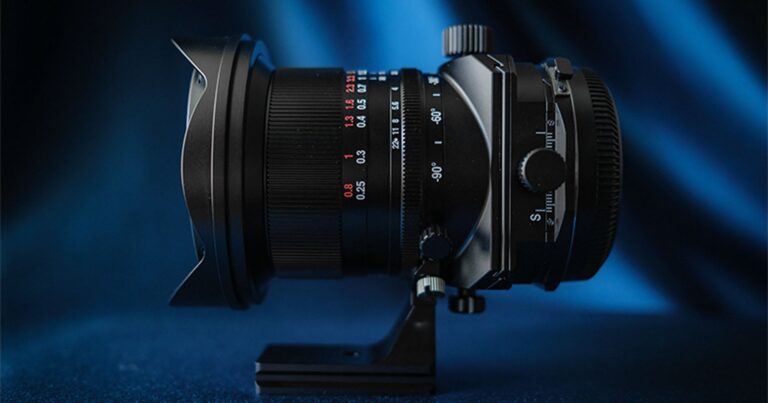
Laowa has unveiled the 24mm f/2 Zero-D Tilt-Shift lens, marking it as the fastest tilt-shift lens ever produced. Designed with architectural and commercial photographers in mind, the lens offers exceptional control over perspective and depth of field through its tilt-shift mechanism. Its wide f/2 aperture sets a new benchmark in the category, enabling low-light performance and selective focus rarely seen in tilt-shift optics.
Built for full-frame systems, the lens features a large image circle that extends compatibility beyond traditional DSLR and mirrorless cameras. This expanded coverage allows seamless use on medium-format platforms, including Fujifilm’s GFX series and Hasselblad’s XCD system. Creators invested in Fujifilm’s renowned color science and retro-inspired X-T and GFX lines can now leverage this lens without compromise, benefiting from both optical precision and the distinctive rendering Fujifilm sensors are known for.
The Zero-D designation reflects Laowa’s commitment to minimizing distortion—a critical trait for architectural work where straight lines must remain true. Combined with the lens’s shift functionality, photographers can correct converging verticals in-camera, reducing reliance on post-processing. This makes the 24mm f/2 Zero-D a practical tool for professionals seeking efficiency and accuracy in demanding shooting environments.
While pricing and availability details were not included in the announcement, the lens positions itself as a premium option for creators who prioritize optical performance and versatility. Its ability to serve both full-frame and medium-format ecosystems underscores a growing trend toward cross-platform compatibility in high-end glass. For Fujifilm GFX users, this means access to a fast, wide-angle tilt-shift solution that aligns with the system’s strength in resolution and tonal gradation.
As the boundaries between formats continue to blur, lenses like Laowa’s 24mm f/2 Zero-D highlight how innovation in optical design can empower creators across systems. By delivering speed, precision, and adaptability, the lens supports the evolving needs of architectural, landscape, and commercial photographers who demand uncompromising quality—whether they’re shooting on Fujifilm’s celebrated GFX bodies or other compatible platforms.
Join the conversation
Load Facebook comments to read and reply using your Facebook account.
