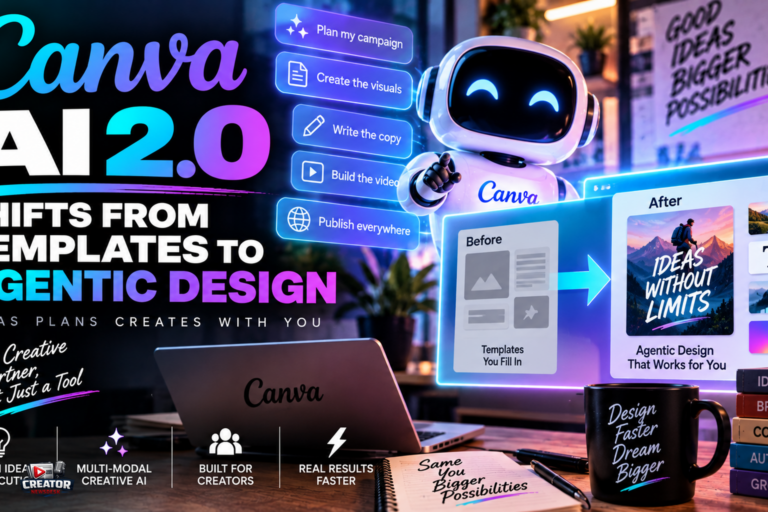
Canva’s AI 2.0 marks the design platform’s shift from template-first to prompt-first creation, replacing a collection of individual AI tools with a unified agentic system. For creators who produce thumbnails, social graphics, presentations and channel art at volume, the change is about output speed rather than novelty.
The old Magic Studio was a set of bolted-on features: Magic Write, Magic Eraser, Magic Edit and the rest, each operating independently on template-based designs. AI 2.0 inverts the model. Creators describe what they want in conversational language, the system generates layered, editable designs rather than flat images, and conversational memory carries context across the session. Multi-format adaptation happens automatically instead of requiring manual resize per platform, and connectors plus web research bring external data into the design process.
The brand controls are the part working creators should examine. Where the old Brand Kit applied colors and fonts, AI 2.0’s brand intelligence learns style patterns from previous work, with a Style Sync function aimed at keeping new designs consistent with recent posts. For creators managing a recognizable visual identity across dozens of weekly assets, that consistency is the difference between a brand and a pile of graphics.
Pricing stays within Canva’s existing tiers, with AI credits governing generation volume. The free tier offers basic AI with limited credits for testing; Pro at $15 per month is the practical entry point for solo creators doing serious batch work, with an AI Pass add-on for heavier generation. Under the hood, Canva says its proprietary models have gotten dramatically cheaper to run, which translates to more credits per dollar at every tier.
The takeaway for creators is to pick five workflows and master them: text-to-image for thumbnails, multi-format resize for cross-platform publishing, on-brand first drafts from prompts, AI copy in your voice, and background control without Photoshop. Ignore the other thirty-five features until those five run smoothly, because the creators getting value from AI 2.0 are the ones who systematized it, not the ones who tried everything once.
Join the conversation
Load Facebook comments to read and reply using your Facebook account.
