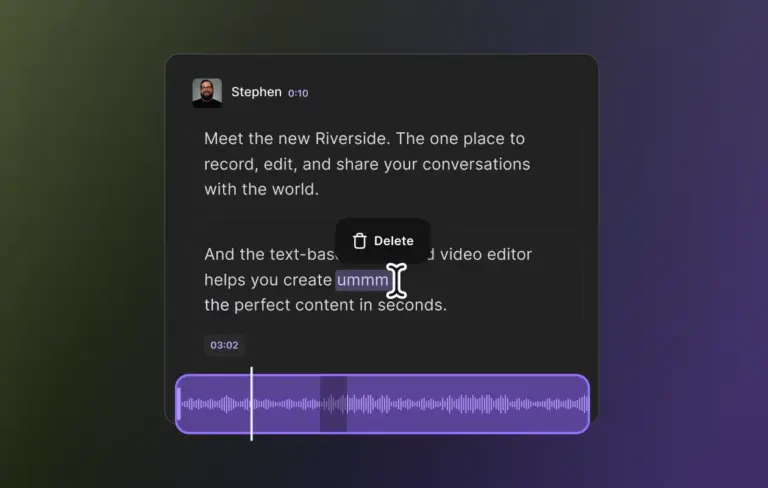
Editing video no longer requires scrubbing through timelines frame by frame. According to Riverside’s latest guide, creators can now make precise cuts, trim segments, and rearrange sequences simply by editing the text in their video’s transcript. This text-based approach streamlines post-production, especially for interviews, podcasts, and talking-head content where spoken words drive the narrative. By treating video like a document, editors can delete unwanted sections by removing corresponding text, making the process intuitive and significantly faster than traditional methods. The technique leverages automatic speech recognition to generate accurate transcripts, which then serve as the editing interface. Changes made to the text are instantly reflected in the timeline, allowing real-time preview and adjustment without needing advanced editing skills. This lowers the barrier for solo creators and small teams aiming to produce polished content efficiently. For creators focused on output speed and consistency, text-based editing reduces reliance on complex software mastery. It enables quick turnarounds for social media clips, highlight reels, or educational videos where timing and clarity matter most. As highlighted in the October 2026 Riverside blog post, this method isn’t just convenient—it’s reshaping how modern creators approach video production by aligning editing workflows with familiar text manipulation tools. Adopting this strategy can free up time for creativity while maintaining professional quality. Creators looking to optimize their workflow should explore platforms offering integrated transcript editing features to stay competitive in fast-paced digital environments.
Join the conversation
Load Facebook comments to read and reply using your Facebook account.
