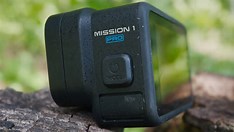
GoPro’s Mission 1 Pro arrives with a promise to elevate action cinematography through a larger sensor and improved dynamic range, as noted in Wired’s July 2026 review. The upgrade delivers noticeably richer footage, especially in low-light and high-contrast scenarios, appealing to creators prioritizing cinematic quality over rugged simplicity. However, real-world testing reveals a recurring limitation: the camera overheats during extended 4K/60p or higher recording sessions, often shutting down after 15–20 minutes of continuous use.
This isn’t an isolated firmware glitch but a symptom of thermal design constraints. The larger sensor, while beneficial for image quality, generates more heat within a compact body that lacks adequate heat dissipation. Unlike the DJI Osmo Action 4, which employs a dual-layer cooling system and maintains stable performance for over 30 minutes in 4K/60p, or the Insta360 X4K management, the Mission 1 Pro use cases, or the Insta360 X4 with its efficient passive cooling and thermal throttling that avoids abrupt shutdowns, the Mission 1 Pro struggles under sustained workloads.
For creators relying on long takes—such as sports documentary filmmakers or vloggers capturing uninterrupted sequences—this limitation forces disruptive workflows, including frequent cooldown breaks or reliance on external rigs. While GoPro markets the Mission 1 Pro as a leap toward professional-grade action imaging, its thermal ceiling undermines that ambition in practical field use. The contrast with competitors highlights a critical trade-off: sensor upgrade cost, uninterrupted recording.
Join the conversation
Load Facebook comments to read and reply using your Facebook account.
