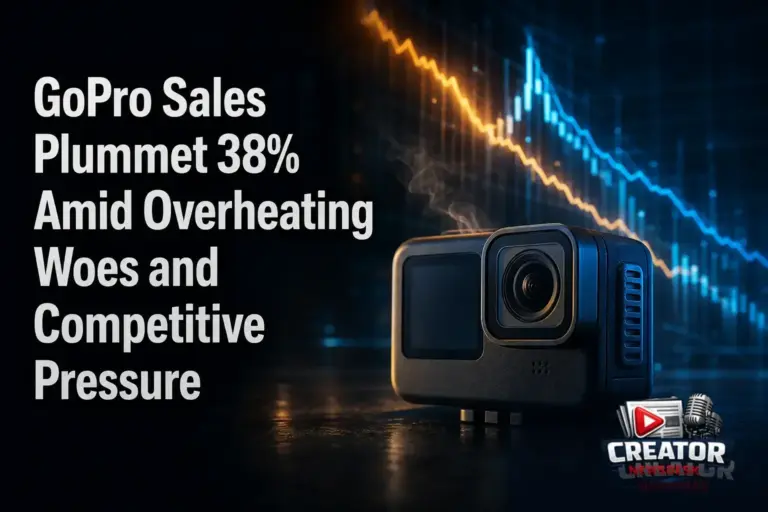
GoPro’s second-quarter 2026 results reveal a deepening crisis, with camera shipments falling 38% year-over-year to 291,000 units and revenue declining 31% to $105 million. The quarterly loss widened to $51 million, leaving the company with just $27 million in cash and equivalents—a stark indicator of financial strain. These figures reflect more than market volatility; they point to persistent product issues eroding user trust.
As a gear tester who uses action cameras daily in demanding environments, I’ve observed that GoPro’s overheating isn’t an occasional glitch—it’s a recurring design limitation. During extended 4K recording sessions, especially in warm climates or enclosed mounts, the Hero series frequently throttles performance or shuts down entirely. This disrupts real-world workflows for creators who rely on uninterrupted capture, whether filming motocross, surfing, or time-lapses in direct sun.
Competitors like DJI and Insta360 have capitalized on this weakness. DJI’s Osmo Action series leverages efficient thermal management and dual screens to sustain longer recording times, while Insta360’s modular X4 offers superior heat dissipation and 8K capabilities without frequent thermal cutoffs. Both brands have gained traction among professional creators prioritizing reliability over brand loyalty.
GoPro’s current cash runway suggests urgency in its reported sale process, now in later stages. However, without addressing core engineering flaws—particularly thermal design and real-world usability—the company risks further attrition to rivals who deliver consistent performance where it matters most: in the field, not just the lab.
Creator Newsdesk will continue monitoring how GoPro’s next moves impact creators dependent on durable, high-performance gear.
Join the conversation
Load Facebook comments to read and reply using your Facebook account.
