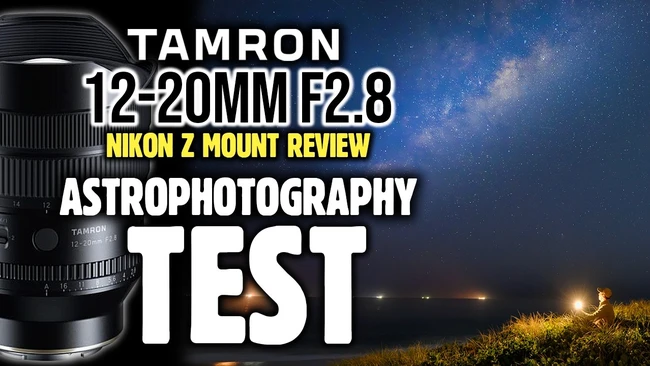
For years, the conventional wisdom among astrophotographers has been clear: when the sun goes down, reach for a prime lens. The optical purity, extra sharpness, and better correction of coma and astigmatism in dedicated primes have long been the gold standard for capturing the stars. But a lens that dares to challenge that status quo has recently emerged, and it's a zoom. According to a report from Fstoppers, a 12-20mm zoom at f/2.8 is being positioned as a viable alternative—wide enough to swallow the Milky Way and fast enough to pull in faint starlight.
The lens in question sits right in a sweet spot for astrophotography. Its wide-angle focal range is ideal for capturing expansive nightscapes, while the constant f/2.8 aperture ensures it can gather the enormous amount of light needed for detailed star fields. While the source summary does not name a specific manufacturer, the implications are clear: this isn't a typical slow variable-aperture kit zoom. This is a lens designed with low-light capability in mind.
For content creators, the appeal of a zoom lens that can keep pace with a prime is significant. While primes often offer a marginal advantage in sharpness and flare control, a zoom provides invaluable flexibility. A single 12-20mm f/2.8 could service everything from dramatic landscape shots at sunset to crystal-clear timelapses of the Milky Way, without the need to swap lenses in the dark. That exchange can mean lost shots or missed opportunities, especially during fast-changing twilight conditions.
Of course, the question remains whether an f/2.8 zoom can truly replace a dedicated f/1.8 or f/1.4 prime for astrophotography. The source does not claim it matches the brightest primes in raw light-gathering, but rather indicates it can "keep pace." For creators producing content for clients, YouTube, or stock, the zoom may strike an ideal balance between optical performance and practical workflow efficiency. It reduces the burden of carrying multiple primes and allows more time to compose and shoot.
As with any gear decision, the suitability of this lens
Join the conversation
Load Facebook comments to read and reply using your Facebook account.
